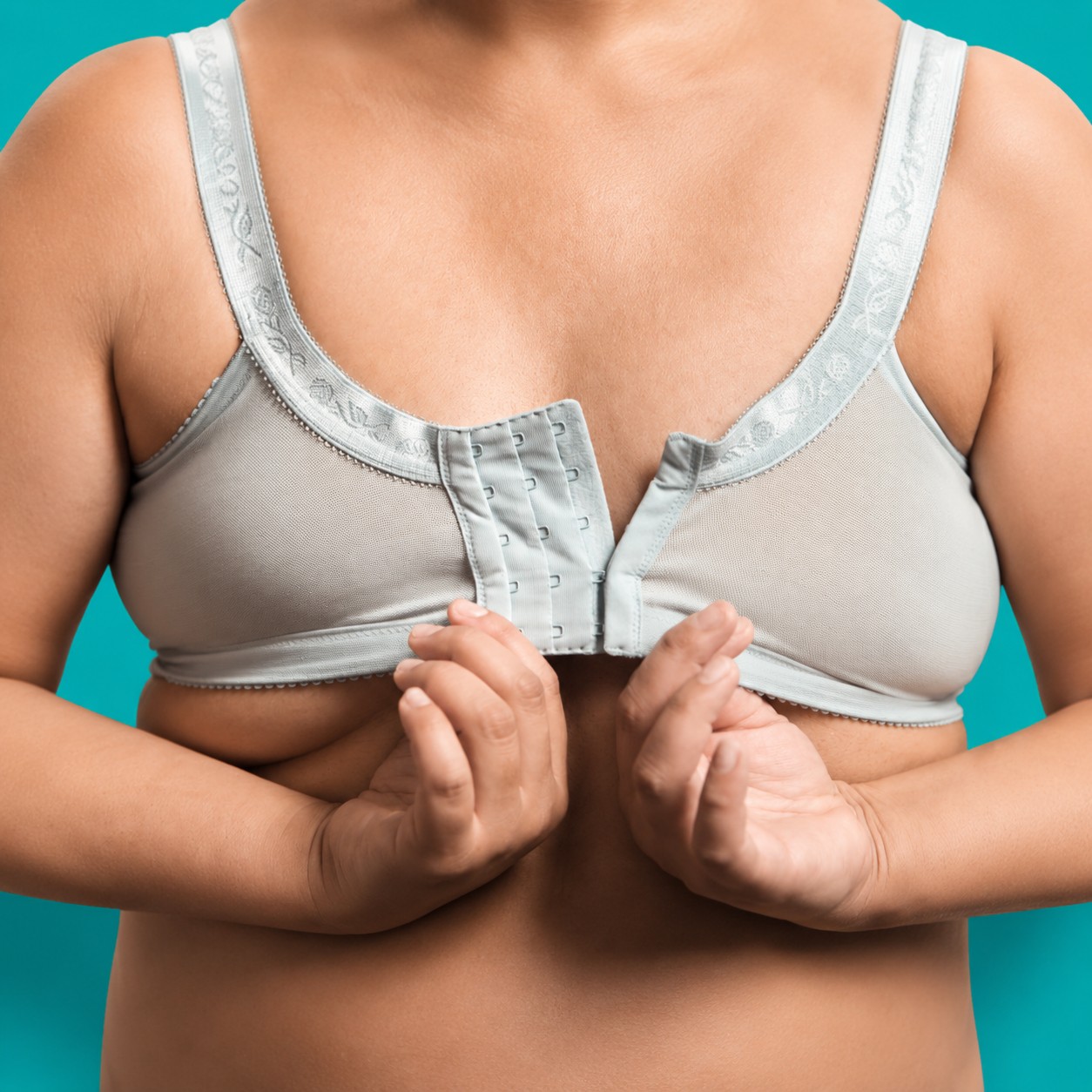

While a loose bra band cannot provide adequate support, a band that is too tight creates a different set of problems. An overly tight band places excessive tension on the fabric, elastic, and the wearer’s body, making the bra uncomfortable to wear and shortening the life of the garment. A correctly fitted bra band should feel secure and supportive, not constricting. If the band leaves you counting the minutes until you can take it off, it’s worth taking a closer look at the fit.
Think of your bra band as a suspension system rather than a clamp. Its job is to create controlled tension, not maximum tension. Too little tension and the bra loses stability. Too much tension and the materials, the elastic, and your body all begin to work against one another. The best-fitting bras find that perfect balance where the band quietly does its job without constantly reminding you it’s there.
Many people are surprised to learn that a band rolls up because it’s too tight, not because it’s too loose. When excessive tension is placed on the band, the lower edge may curl or roll upward, particularly if the band is narrow or made from a softer fabric. This happens because the materials are trying to relieve some of the stress being placed on them. Band rolling may also occur if the wearer has excess flesh, known as “bra bulges”. If the bra feels unusually tight at the same time, excessive band tension should be considered as a possible cause. A properly fitted band should lie smoothly against the body without rolling into a rope or folding along its edges.
It’s perfectly normal for every body to have natural curves and soft tissue. A well-fitted bra should work with those curves, not fight against them. However, if the band is too tight, it can compress the tissue around the rib cage, creating pronounced bulging above or below the band. This isn’t simply a cosmetic issue – it often indicates that the band is placing more pressure on the body than necessary. Keep in mind that some degree of softness around the band is completely normal and doesn’t automatically mean the bra is too small. The goal isn’t to eliminate every visible curve, but to achieve a balance between support and comfort.
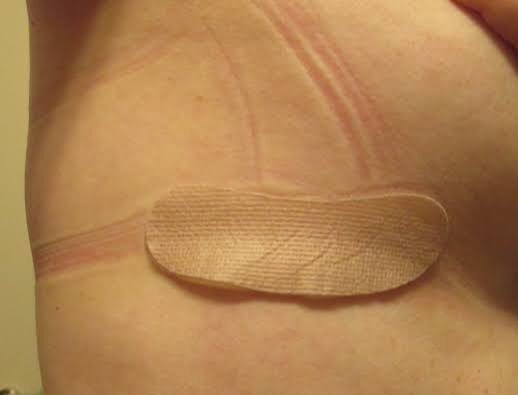
A new bra may feel firmer than an old, stretched-out one, but it should never be painful. If the band causes aching ribs, sharp pressure points, bruising, numbness, or soreness that persists after removing the bra, it’s a clear indication that something isn’t fitting correctly. That bra band may be too tight. If you find yourself putting extra padding under your bra band, like this, it is a sign that your bra band is too tight.
Pain can also result from a combination of factors, including:
Rather than assuming you simply need to “break in” the bra, investigate the cause of the discomfort. A well-made bra should feel like you are wearing nothing, once it’s on.
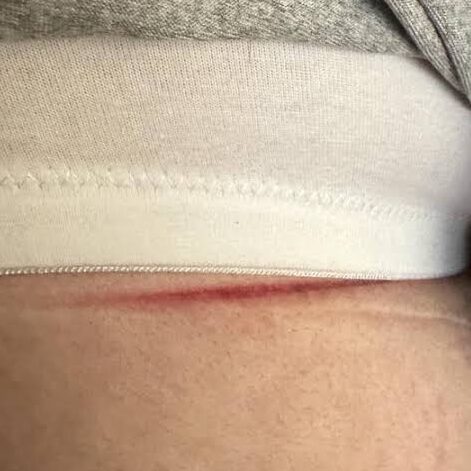
If you have deep red marks when the bra is removed, that is almost always a sign that the bra is too tight. Of course, those marks could also be caused by a latex allergy but that is not the most common cause. If your bra line is not just red, but cutting into the skin, that bra band is too tight!
A properly fitted bra should move with your body as you breathe. Your rib cage naturally expands and contracts throughout the day, particularly during deep breathing, exercise, or even laughing. If the band is so tight that you find yourself taking shallow breaths or feeling restricted when inhaling deeply, it’s too tight.
Try this simple test: fasten your bra, then take several slow, deep breaths. You should feel the band expand slightly with your rib cage without causing discomfort or excessive pressure. Remember that your body also changes slightly throughout the day. After meals, during warm weather, or because of hormonal fluctuations, your rib cage may expand enough that an already tight band becomes uncomfortable. Good bra engineering allows for these normal changes without sacrificing support.
One sign that’s especially important for bra-makers is what happens to the elastic itself. Elastic is designed to stretch within a certain working range. When it’s stretched beyond that range every time the bra is worn, several things can happen:
This is one reason why it’s so important to choose the correct band length and appropriate elastic for the intended level of support. Asking the elastic to compensate for a poorly fitting pattern almost always results in disappointment.
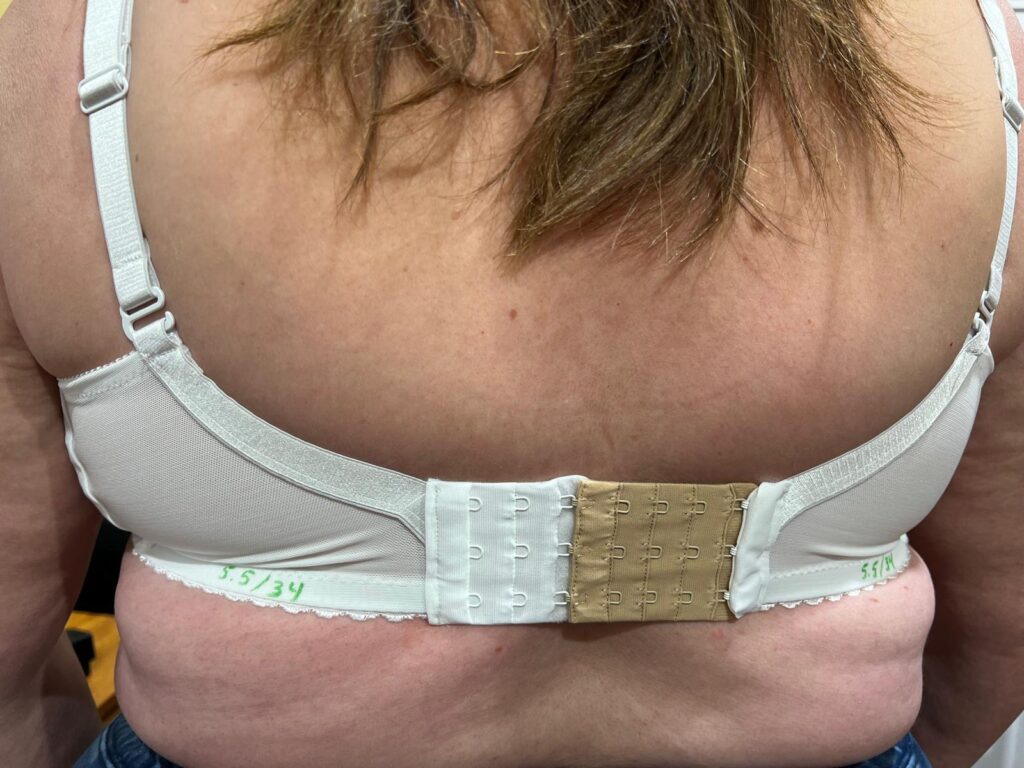
Ah, my old nemesis – Bra Band Extenders – how I hate you! I know, I know, you buy them because otherwise that perfectly good bra won’t fit you, and what a waste! Bra extenders sound good in theory when your band is too tight, but you really need the extra length in the bra band is between the side seam and the strap attachment point. But that is not where a bra extender adds the width – bra extenders add the width at the centre back. They push the straps out toward the shoulders, which then can cause them to slide off. That’s another pain-in-the-butt problem you didn’t need.
One of the biggest misconceptions in bra fitting is that tighter automatically means more supportive. In reality, excessive tension can be just as problematic as insufficient tension. When the band is too tight, the wearer often becomes uncomfortable long before the bra can do its job effectively. Support should come from balanced engineering – not from excessive compression. The ideal bra band provides enough tension to anchor the bra securely while allowing you to move, breathe, and wear it comfortably throughout the day.
Band tightness isn’t determined by the band length alone. The stretch and recovery of the band elastic, the elasticity of the frame fabric (such as power net versus sheer mesh), and even the width of the elastic all influence how firm a finished band will feel. That’s an insight many home sewists overlook. We’ll look at that in my next post. Stay with me and learn all the engineering in the bra band.
To join a private, like-minded community of bra-making enthusiasts, please consider Beverly Johnson’s Bra-making Support Group