
No matter how perfectly you’ve drafted your pattern or how carefully you’ve sewn your bra, the finished fit will only be as good as the elastic you’ve chosen. Elastic is the “working muscle” of the bra band. It provides the controlled tension that keeps the band snug against the body while allowing it to stretch comfortably as you move and breathe.
Many bra-makers assume that all bra band elastics perform similarly, but nothing could be further from the truth. Two elastics that look almost identical may behave very differently once they’re sewn into a bra. Understanding those differences is one of the keys to creating bras that remain supportive, comfortable, and durable over time.
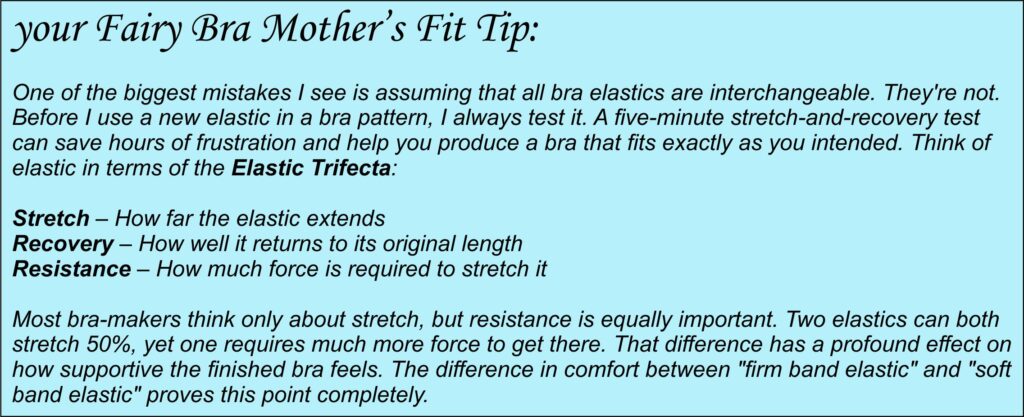
Every elastic has a maximum amount that it can stretch, usually expressed as a percentage of its original length. Some elastics stretch only 25–30%, while others may stretch 75% or even more. However, more stretch doesn’t necessarily mean better support. An elastic with a very high stretch percentage may feel wonderfully soft when first worn, but unless it also has excellent recovery, it may not provide enough resistance to anchor the band securely. Conversely, an elastic with very little stretch can create a band that feels overly firm or restrictive if the pattern isn’t designed for it.
The ideal amount of stretch depends on the bra pattern, the fabric used in the band, the size of the bra, and the level of support you’re trying to achieve. This is why experienced bra-makers don’t simply substitute one elastic for another willy-nilly without considering how it will affect the finished bra band fit.
If stretch determines how far an elastic can extend, recovery determines how well it returns to its original length. In many ways, recovery is even more important than stretch. An elastic with excellent recovery springs back after every movement, helping the band maintain consistent support throughout the day. An elastic with poor recovery gradually relaxes, allowing the band to become looser as it’s worn. We’ve all experienced old elastics (particularly ones with rubber) that stretch out, but they stay stretch out, never to return. That elastic is dead. i have always said…if the elastic is dead, the bra is dead.
This is why two bras made from the same pattern can fit very differently if they’re sewn with different elastics. As I often tell my students: Stretch provides flexibility. Recovery provides lasting support. You need both.
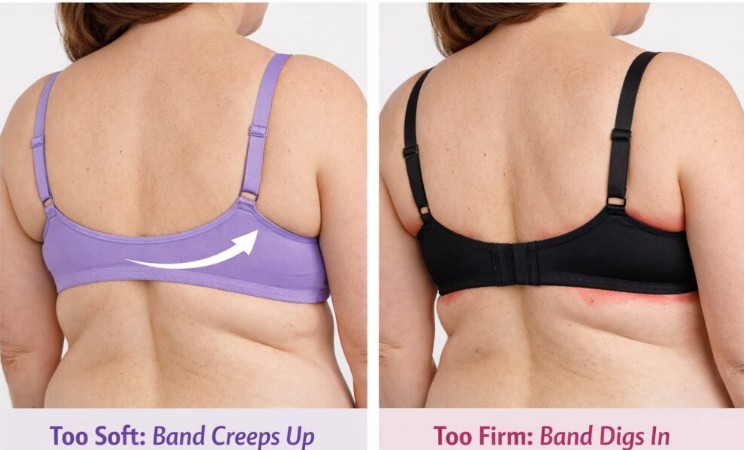
Bra elastics are available in a wide range of firmness, and choosing the right one is just as important as choosing the correct width or decorative edge. A firm elastic offers greater resistance to stretching and is often used in bras requiring higher levels of support, such as full-bust bras, sports bras, or bras with larger cup sizes. It helps stabilize the band and minimizes movement during wear.
A soft elastic, on the other hand, stretches more easily and generally feels gentler against the skin. It can be an excellent choice for lightweight bras, smaller cup sizes, lounge bras, or wearers with very sensitive skin.
Neither type is inherently better than the other. The best choice depends on the overall design of the bra and the needs of the person who will be wearing it. Good bra engineering is about selecting components that work together as a system – not simply choosing the firmest elastic available.
One of the best habits any bra-maker can develop is testing a new elastic before cutting into expensive fabrics. Manufacturers rarely describe elastic using standardized terms such as “firm,” “medium,” or “soft,” and even elastics from the same supplier may vary from one production run to the next. Relying solely on appearance or feel can lead to disappointing results. By measuring both the stretch and the recovery of your elastic before using it, you can predict how it will behave in the finished bra and make informed adjustments to your pattern if necessary.
Testing also allows you to build your own reference library of favourite elastic samples. Over time, you’ll learn which elastic work best for everyday bras, sports bras, full-bust support, or delicate lingerie. This small investment of time can save hours of fitting adjustments later. I’ve even created an elastic testing worksheet so you can keep a record of your own elastics.
Remember that the finished fit of a bra band isn’t determined by the elastic alone. The pattern, the band fabric, the width of the elastic, and even the construction method all influence how the finished bra will feel. A firm elastic sewn into a highly stretchy power net may produce a similar result to a softer elastic sewn into a firmer fabric. That’s why experienced bra-makers evaluate the entire system rather than focusing on any single component. Changing the elastic without considering the other materials is a bit like changing the springs on a car without considering the shock absorbers or tires. Every part influences the overall performance.
Together, these tutorials will help you choose elastics with confidence and achieve more consistent results in every bra you make.
Consider joining our community of like-minded bra-making enthusiasts by joining Beverly Johnson’s Bra-making Support Group