

The bra band is the foundation of every well-fitting bra. Although many people focus on cup size, the band provides most of the garment’s support. A correctly fitted band should sit level around the body, remain comfortably snug, and anchor the cups without riding up or shifting during movement. A well-fitted bra band should feel firm but comfortable. It should stay level around your body and remain in place throughout the day, allowing every other component of the bra to do its job effectively.
When people think about bra support, they often assume the cups or straps do most of the work. In reality, the bra band is the foundation of the entire garment. It wraps around the rib cage, which is a stable part of the body capable of carrying the weight of the breasts comfortably.
Most people think of the bra as a structure like a suspension bridge, where the straps carry the weight of the breasts. While that is a concept that has been around for years…I disagree. I have always taught that the bra is more like a cantilevered structure, more similar to a deck platform that overhangs the posts underneath. If the structure (band) below the platform (cups) is not correct, the platform fails.
Engineering Insight
A bra band behaves much like the foundation of a building. If the foundation shifts, every structure above it is affected. In the same way, a loose or unstable band changes the position of the underwires, alters cup fit, and transfers support to the straps instead of the torso.

One of the biggest misconceptions about bras is that the straps provide the support. In reality, the band is responsible for carrying most of the weight of the breasts. When the bra band fit correctly, it hugs the rib cage firmly enough that the weight of the breasts is transferred directly to the torso. Because the rib cage is a rigid structure, it can comfortably support this weight for hours without discomfort.
The cups simply cradle and shape the breast tissue, while the band keeps the entire bra securely positioned against the body. If the band becomes too loose, the cups begin to drift away from the chest, the underwires lose contact with the body, and support quickly disappears. As I often tell my students: The cups hold the breasts, but the band holds the cups. Without a stable band, even perfectly drafted cups cannot provide proper support.
Bra straps have an important job, but it isn’t the one most people think. Their primary purpose is to stabilize the upper cups and prevent them from flopping forward. They help maintain the shape and position of the bra, especially during movement, but they should contribute only a small portion of the overall support.
If your shoulders are carrying most of the weight, something is wrong. Many women instinctively tighten their straps when a bra feels unsupportive. Unfortunately, this often makes the problem worse. Tight straps pull the back of the band upward, causing it to ride up between the shoulder blades. As the back rises, the front of the bra drops down and away from the chest, changing the position of the underwires and distorting the fit of the cups. Think of the body as a teeter-totter. If the band back is going up, then the front is coming down!
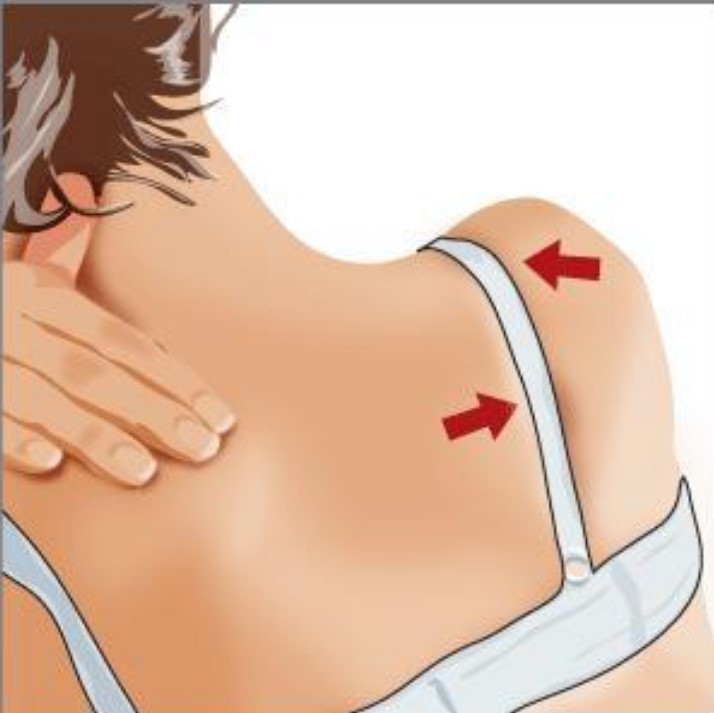
This creates a cycle of discomfort: The band becomes loose. The wearer tightens the straps. The band rides up. The cups shift out of position. Support decreases even further. The cycle continues. A properly fitted bra should still feel supportive even if the straps are loosened temporarily. If everything falls apart the moment the straps are relaxed, the band is almost certainly too loose.
Many fitting problems that appear to be cup issues actually begin with an incorrectly fitted band. The band establishes the position of the entire bra. Once it is sitting level and snug around the rib cage, the cups can align correctly with the breasts. If the band is too loose or too tight, the cups are no longer sitting where the pattern designer intended.
For example:
This is why professional bra fitters always evaluate the band before assessing the cups. Until the band is fitted correctly, it’s impossible to know whether the cups actually need adjustment. As a bra-maker, you’ll save yourself countless fitting sessions by following one simple rule: Fit the frame first. Fit the cups second.
The goal of a well-engineered bra is to distribute the weight of the breasts efficiently across the strongest parts of the body. The rib cage is ideally suited for this task. It forms a stable structure that can comfortably support weight through the bra band. The shoulders, on the other hand, are made up of muscles, tendons, and nerves that tire much more easily under continuous load.
When a bra band is doing its job correctly:
When the band is too loose, this balance changes dramatically. The shoulders begin carrying far more weight, often leading to sore neck muscles, aching shoulders, strap grooves, and fatigue after only a few hours of wear.
Good bra engineering is really about managing forces. Every component – the band, cups, underwires, straps, and elastics – has to work together to distribute weight efficiently. Proper bra band fit is the key that makes the entire system function.
To join our community of enthusiastic and experienced bra-makers, consider joining our private Facebook group, Beverly Johnson’s Bra-making Support group