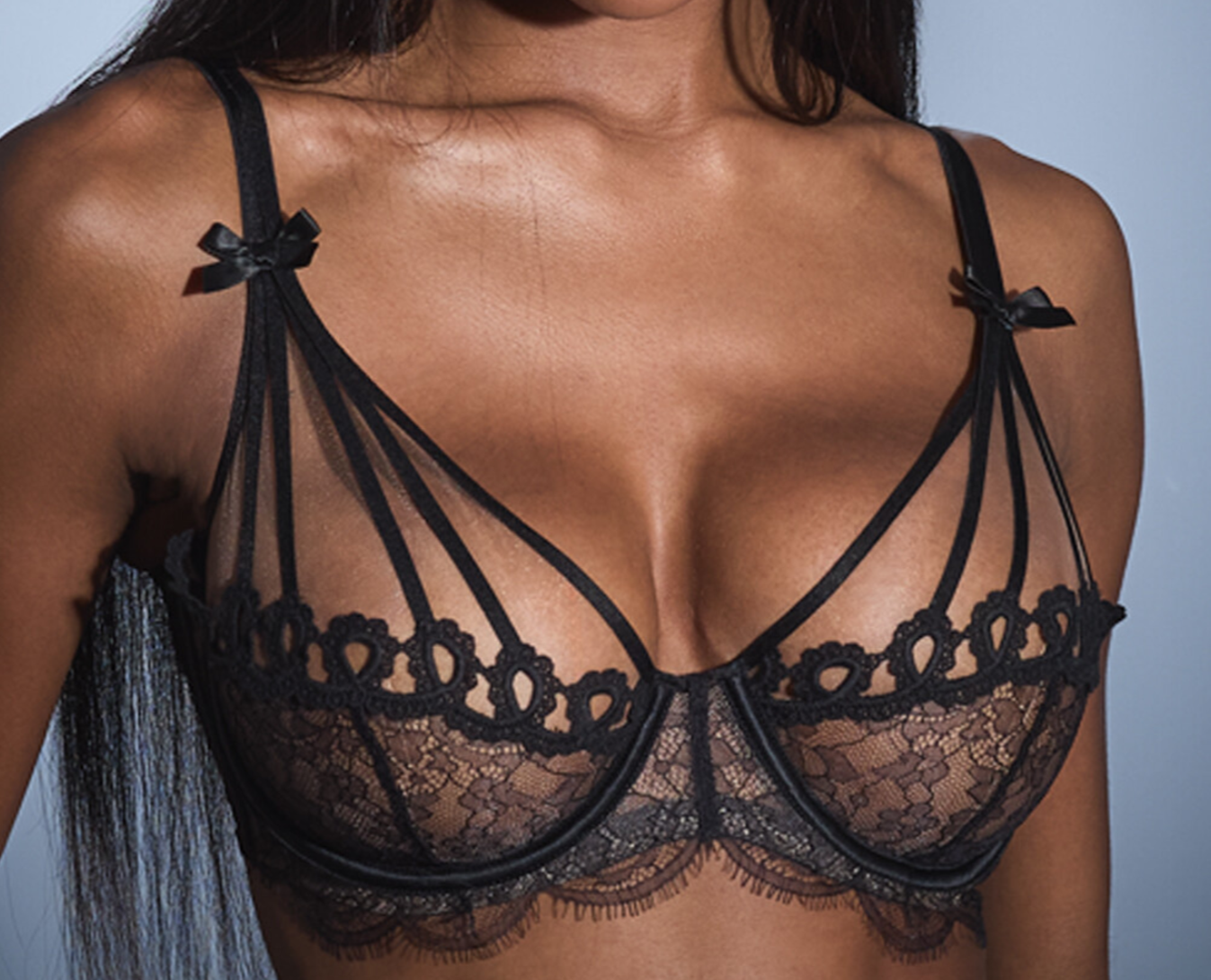

When you look at a bra, what catches your eye first? The beautiful lace? The shape of the cups? Perhaps the clever strap arrangement or the decorative details?
But have you ever stopped to look at the band construction? That is one of the first things we are learning in Level One of the Legacy Program. It’s a valuable lesson.
While the cups tend to get all the attention, the band is doing much of the heavy lifting. In fact, a well-fitting band provides the foundation of support, while the straps help stabilize the cups.
What many bra-makers don’t realize is that there are four distinct types of bra band construction. Learning to recognize them is an important skill, particularly if you enjoy analyzing ready-to-wear bras, cloning a favourite, or designing your own patterns.
Let’s uncover the mystery of the four types of bra band!
The full band is probably the most familiar construction to bra-makers. It is also sometimes called a full-frame bra.
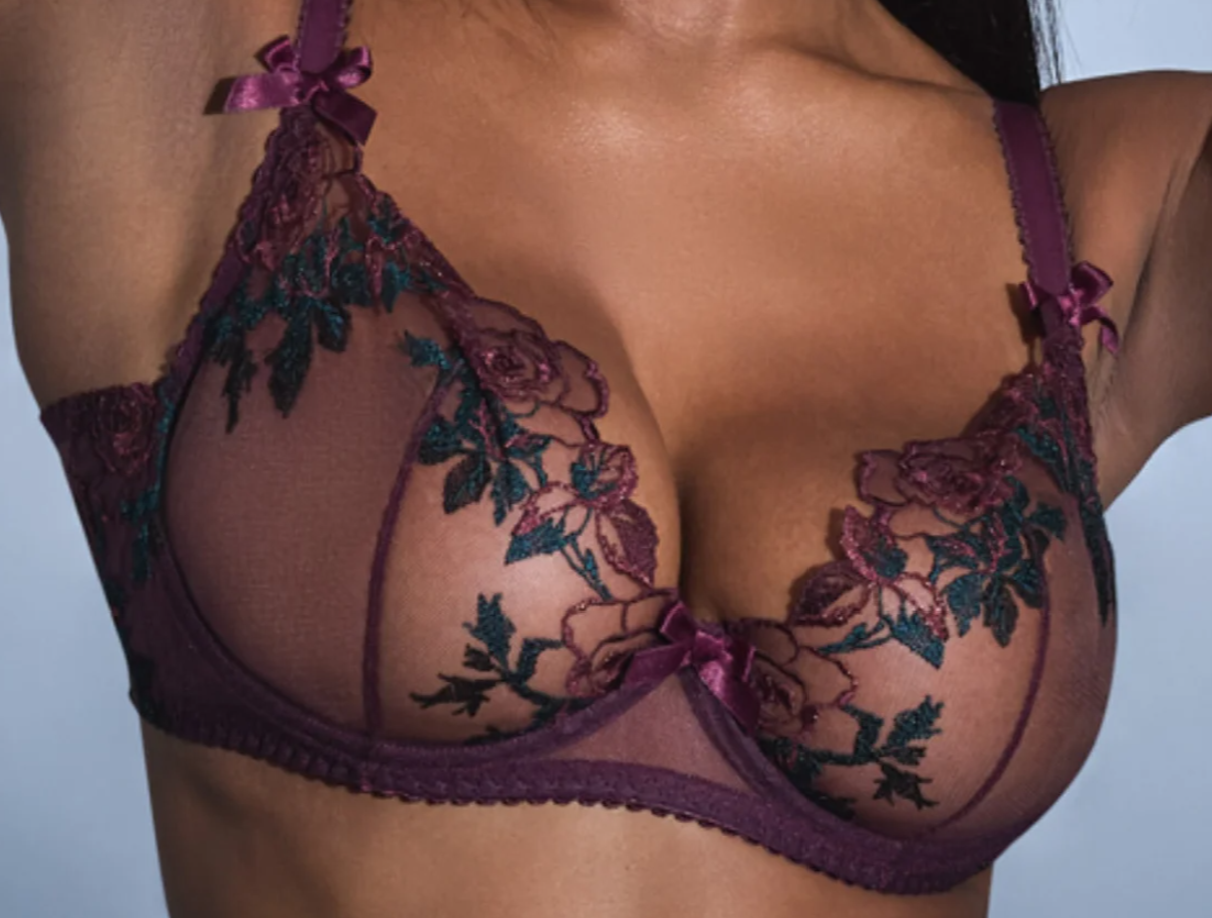
In this construction, the frame extends beneath both cups, connecting the centre bridge to the side bands. The cups are sewn into openings in the frame, and the underwire channeling follows the lower edge of each cup.
The key identifying feature is the continuous frame of fabric running beneath the cups.
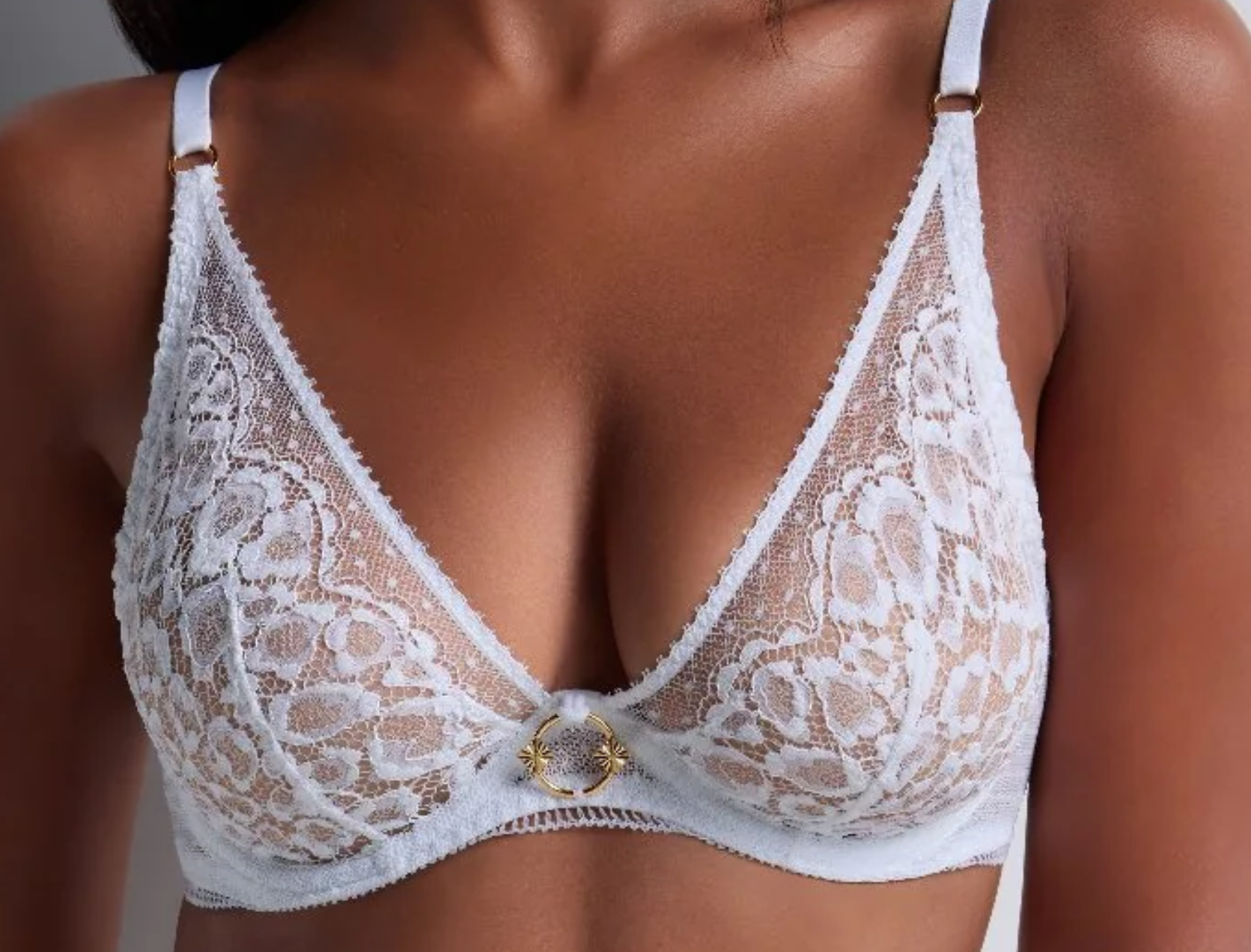
Look closely at the bottom of the bra. Can you see a strip of frame fabric or lace below the cup seams? Does that fabric connect to the bridge at the centre front? If so, you’re probably looking at a full band.
The full band provides a stable foundation and offers plenty of opportunities for pattern adjustments, making it a popular choice for bra-making classes and custom fitting.
Identification clue: Look for a continuous frame beneath both cups.
At first glance, a partial band bra may look very similar to a full band bra. The difference becomes obvious when you examine the lower edge of the cups.
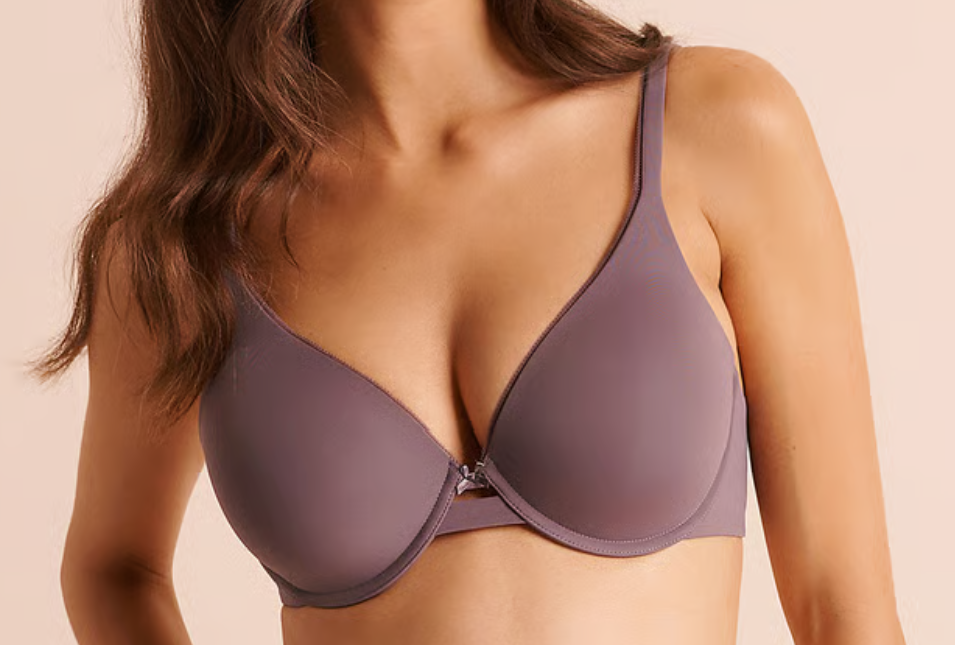
In a partial band construction, there is no continuous frame extending beneath the cups. Instead, the lower edge of the cups and their underwire channeling form the bottom edge of the bra in that area.
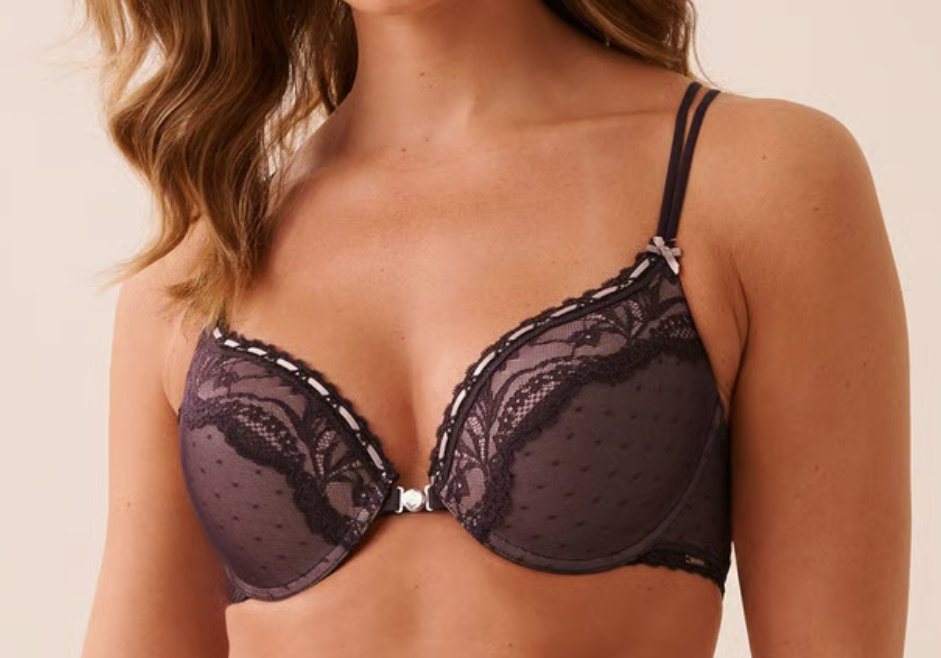
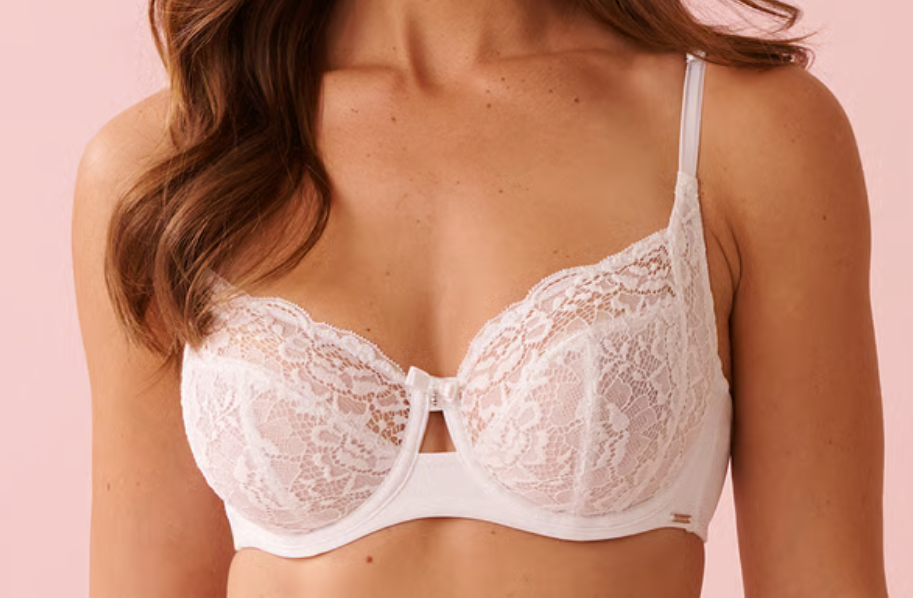
The bridge still connects the cups at the centre front, and the side bands extend around the body, but the fabric frame beneath the cups is absent. Even if that space where the frame is absent is fairly small, like the photo above, it is still a partial band.
This construction creates a more open appearance below the cups and eliminates the separate frame fabric that would otherwise extend beneath them.
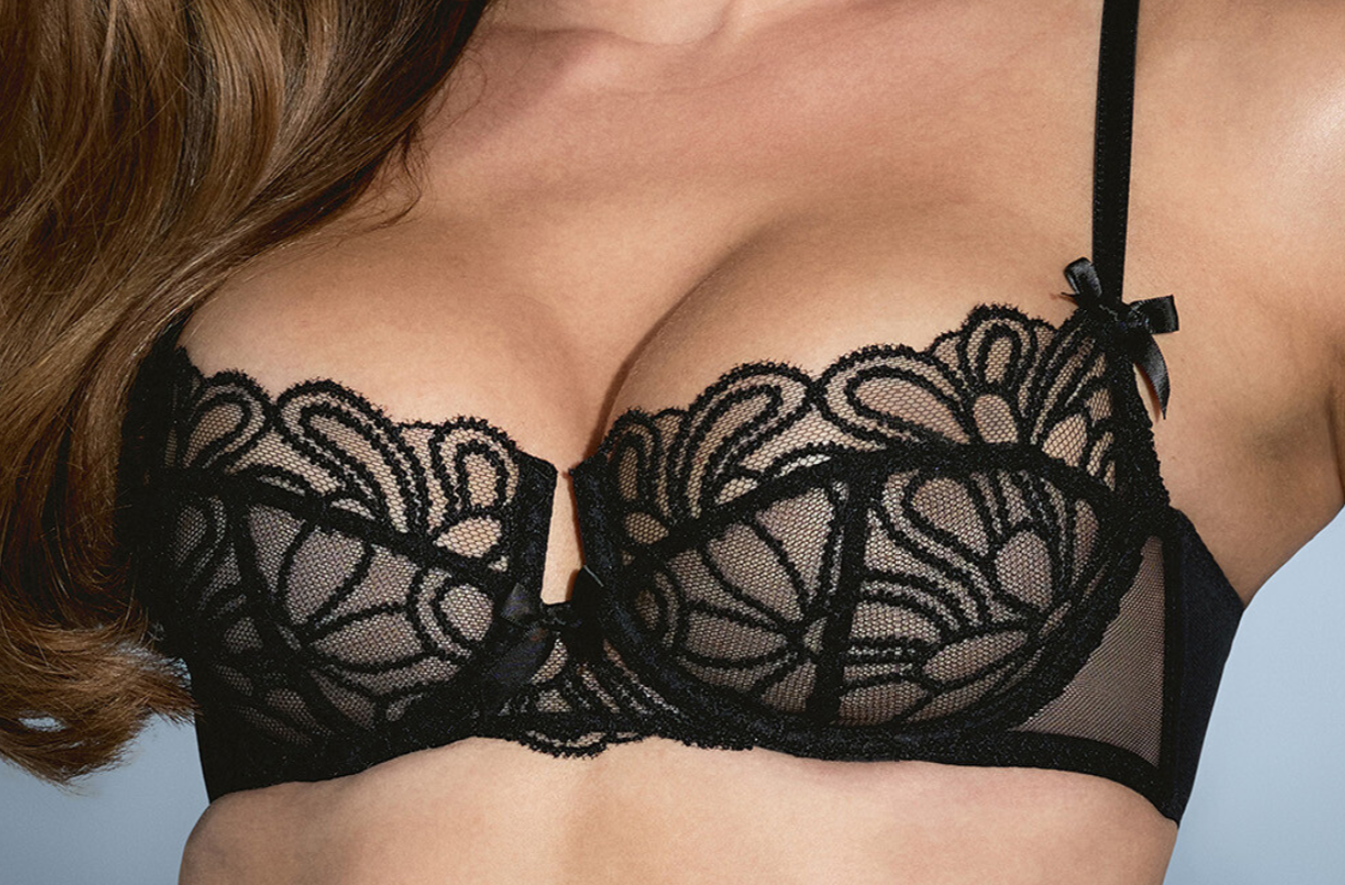
Identification clue: Look beneath the cups. If the channeling forms the lower edge, without a separate strip of frame fabric below it, you’re likely looking at a partial band.
Now things get interesting!
In a conventional full band bra, the bridge is a separate section of fabric between the cups. The seams where the cups meet the bridge define the sides of that centre-front area. generally speaking, the bridge space widens toward the bottom edge of the bra, forming a natural triangular space between the breasts.
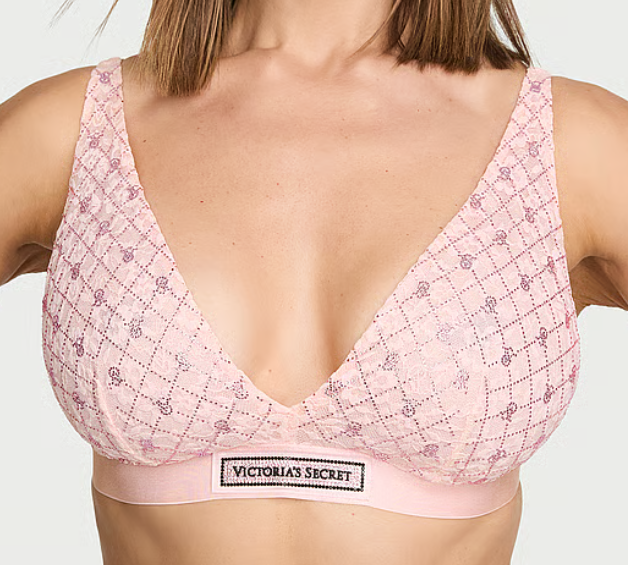
But what happens if we move those seams?
In an integrated bridge construction, the seams that would normally separate the cups from the bridge are removed or relocated onto the breast area.
This changes the way the centre front and cups are divided into pattern pieces.
Sometimes the result is an expanded centre-front area, which can provide room for a front closure. However, an integrated bridge does not have to include a front closure.
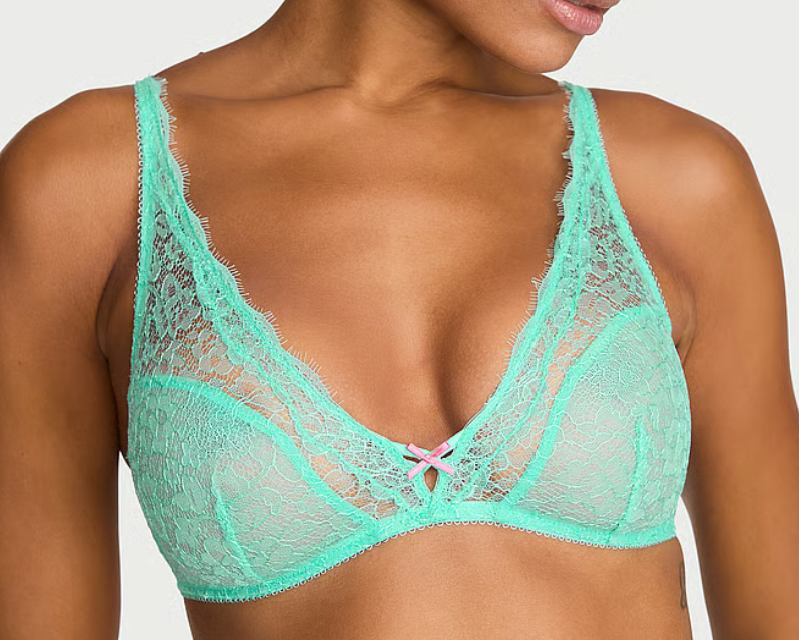
In other designs, the cups themselves absorb the width that would ordinarily belong to the bridge. The traditional cup-to-bridge seams disappear, becoming part of the cup design instead.
The important feature isn’t the closure or even the apparent width of the bridge. It’s the relocation of the seams from beside the breasts onto the breasts.
This is a wonderful example of how changing seam placement can transform a bra’s construction without necessarily changing its basic purpose.
Identification clue: Look for cup seams positioned over the breast rather than along the conventional cup-to-bridge junction.
Our fourth construction requires us to look at something many bra-makers don’t immediately notice: the underwire channeling.
In an in-turn channel construction, the channeling is turned inside the cup (like we do for a partial band bra), rather than being turned outside the frame in the way we make a full band.

This changes how the lower cup edge and channeling are finished. if you look closely, you can see the seam between the cup and the frame is now outside the actual wire; whereas in a full band bra, the seam between the cup and the frame is inside the wire.
Unlike the other constructions, where the relationship between the cups, frame and bridge provides the most obvious clues, the in-turn channel is best identified by examining the direction and finishing of the underwire channeling.
Also, a dead give-away is when you see a apparently full band bra that has a dropped bridge or a peek-a-boo front, it has an in-turn channel. That’s because the channeling needs to turn inside in order to hide the raw edges of the cup, as you see below.
You may need to turn the bra inside out to see exactly what’s happening. That’s part of the fun of becoming a bra detective!
Identification clue: Examine the inside of the bra and follow the channeling around the lower cup to see how it turns and is secured. Also, if a full band bra has a dropped bridge or a peek-a-boo front, chances are, it has an in-turn channel.
Now that you know the four types of bra band, here’s a little challenge.
Find a few bras in your own collection and examine their construction. Don’t be distracted by the lace, colours or decorative details. Instead, ask yourself three questions:
These three questions will help you look beyond the surface and recognize the engineering behind the design.
Remember, no single band construction guarantees a better fit or more support. Those depend on the relationship between the pattern, the materials, the wearer and the overall design.
Once you learn to recognize these four types of bra band, you’ll never look at a bra quite the same way again!
Understanding construction is one of the first steps toward becoming a more confident pattern analyst, fitter and designer. What once looked like a complicated arrangement of seams begins to reveal its secrets.
And that’s where the real magic of bra-making begins: when you stop seeing only the finished bra and start seeing the possibilities hidden inside the pattern.
Happy bra-making!