
If there’s one thing I wish every bra maker understood sooner, it’s this:
the band does the heavy lifting – not the straps.
And at the heart of every good bra band is one quietly powerful component: bra band elastic.
Two elastics that look nearly identical can behave very differently once sewn into a bra. One may feel supportive and stable; the other may stretch out, ride up, or feel oddly unsupportive. The difference usually comes down to stretch and recovery – and once you understand those two things, bra fitting starts to feel a lot less mysterious.
Pull up a chair. Your Fairy Bra Mother is about to explain.
Bra band elastic is applied along the lower edge of the bra band (and often the upper edge as well). Its job is to:
Unlike waistband elastic, bra band elastic must balance firmness, comfort, stretch, and longevity. Too soft, and the band creeps upward. Too firm, and the bra feels like it’s holding a grudge.
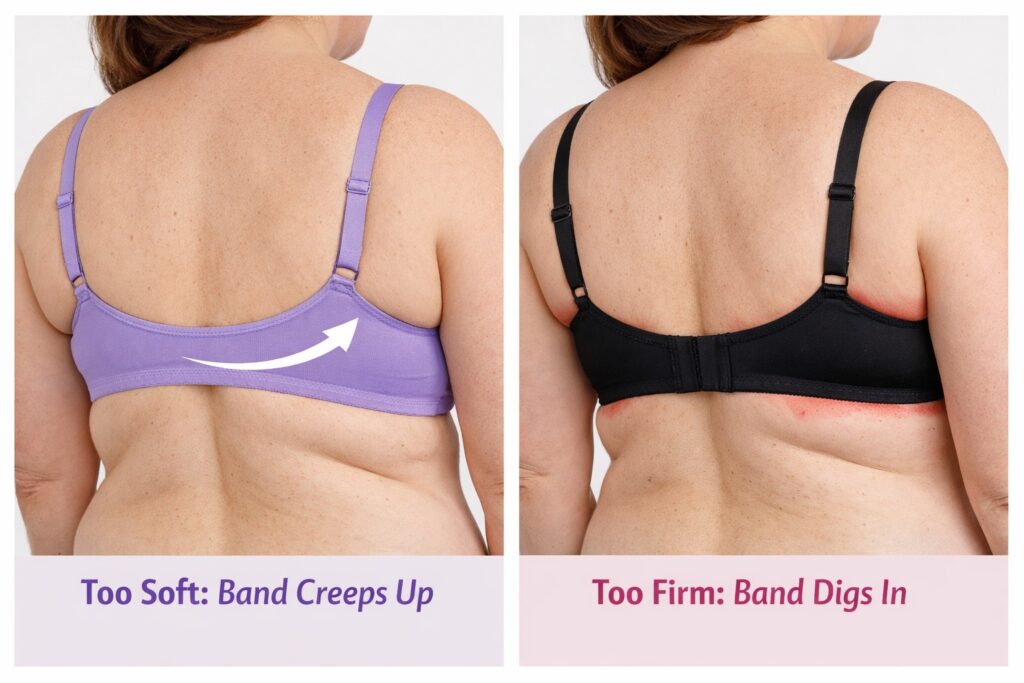
This is why elastic choice has such a profound effect on fit — sometimes more than the pattern itself.
Elastic stretch determines how much tension is created when the bra is worn.
If an elastic stretches easily, the band will feel looser unless it’s adjusted. If it stretches very little, the same band length can suddenly feel tight or restrictive.
This is why:
(Justice for the pattern, please.)
Understanding stretch percentage lets you predict how an elastic will behave before it ends up stitched into place.
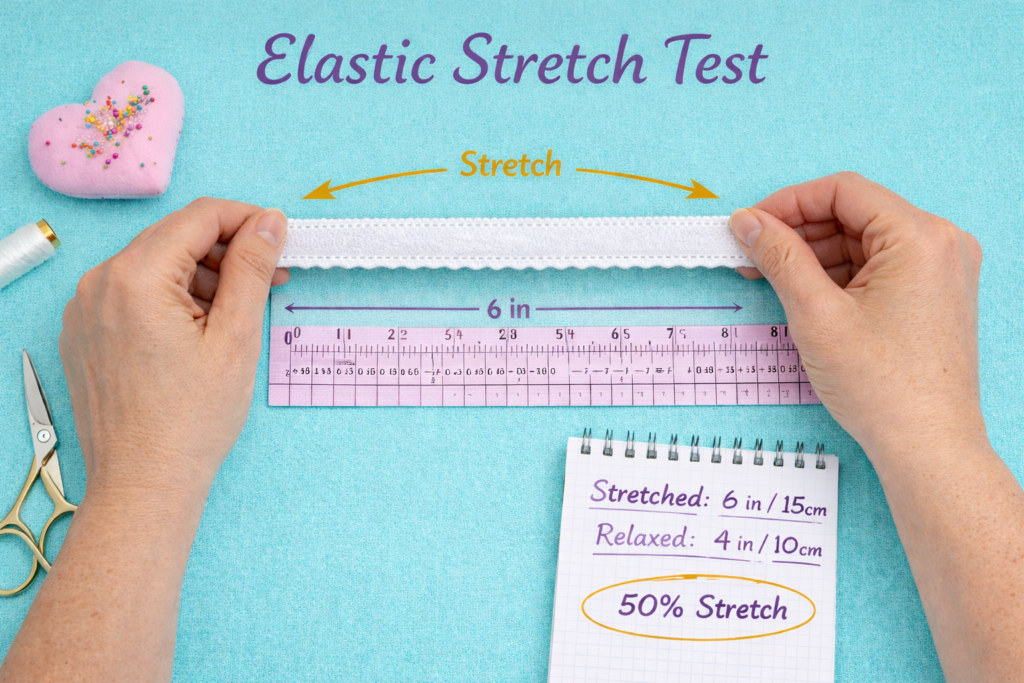
You don’t need special equipment – just a ruler and a moment of attention.
(Stretched length – relaxed length) ÷ relaxed length × 100That elastic has 50% stretch.
| Stretch % | Typical Feel |
|---|---|
| 30 – 40% | Firm and supportive |
| 40 – 50% | Medium-firm (most common) |
| 50 – 70% | Soft and flexible |
There is no “correct” stretch — only what works for a particular body, fabric, and design.
Now here’s where many sewists get tripped up. Elastic recovery is how well elastic returns to its original length after being stretched. An elastic can stretch beautifully… and still be a poor choice if it doesn’t recover well.
Stretch the elastic firmly for a few seconds, then let it go.
Poor recovery often leads to bands that feel fine at first — and noticeably looser after a few wears. And no one enjoys a bra that loses enthusiasm halfway through the day.
Once you start measuring elastic stretch and paying attention to recovery:
You’re no longer guessing — you’re making informed choices.
And that, my dear sewists, is where bra making becomes far more satisfying.
My next post will explain more!
You can watch my practical demonstration on elastics in this video.