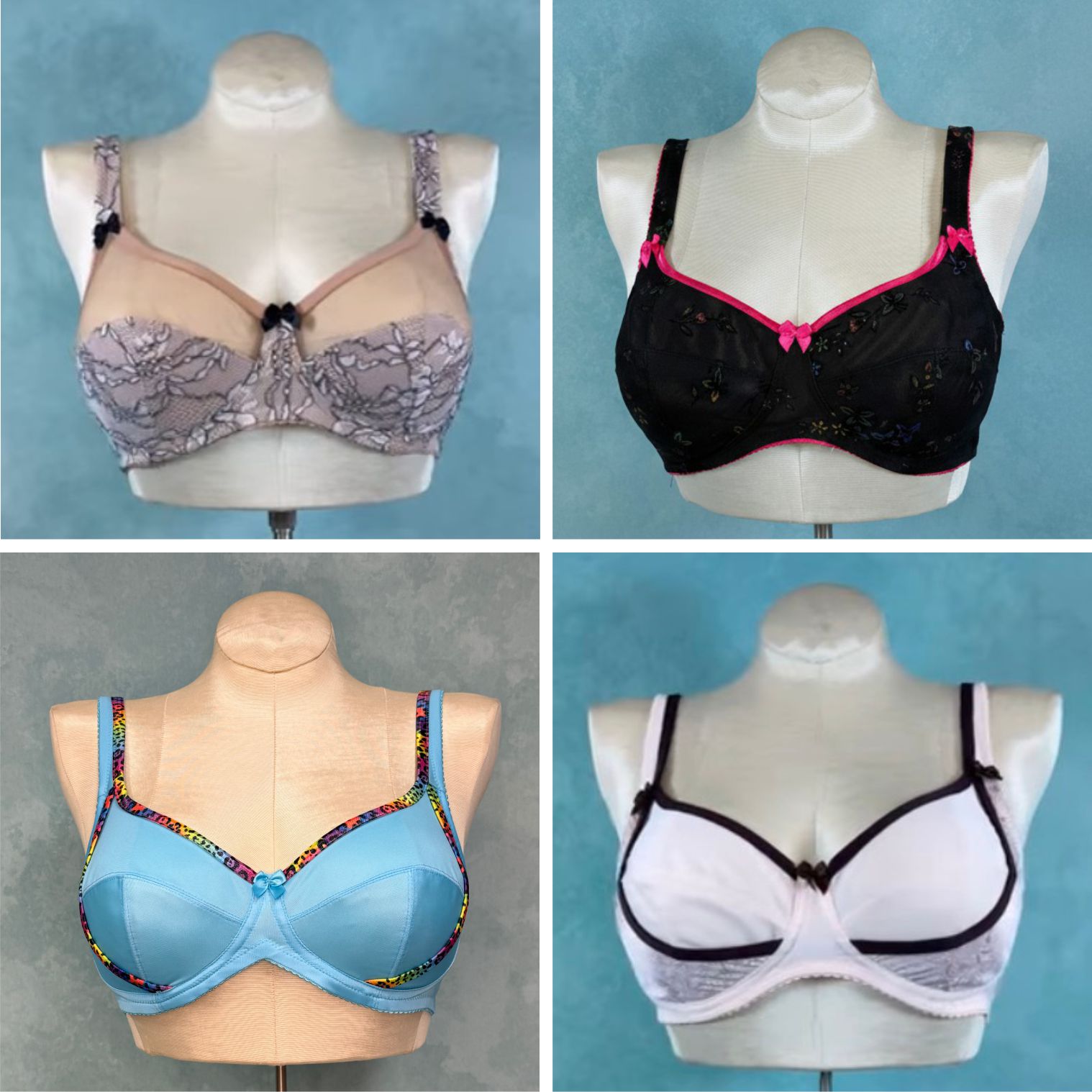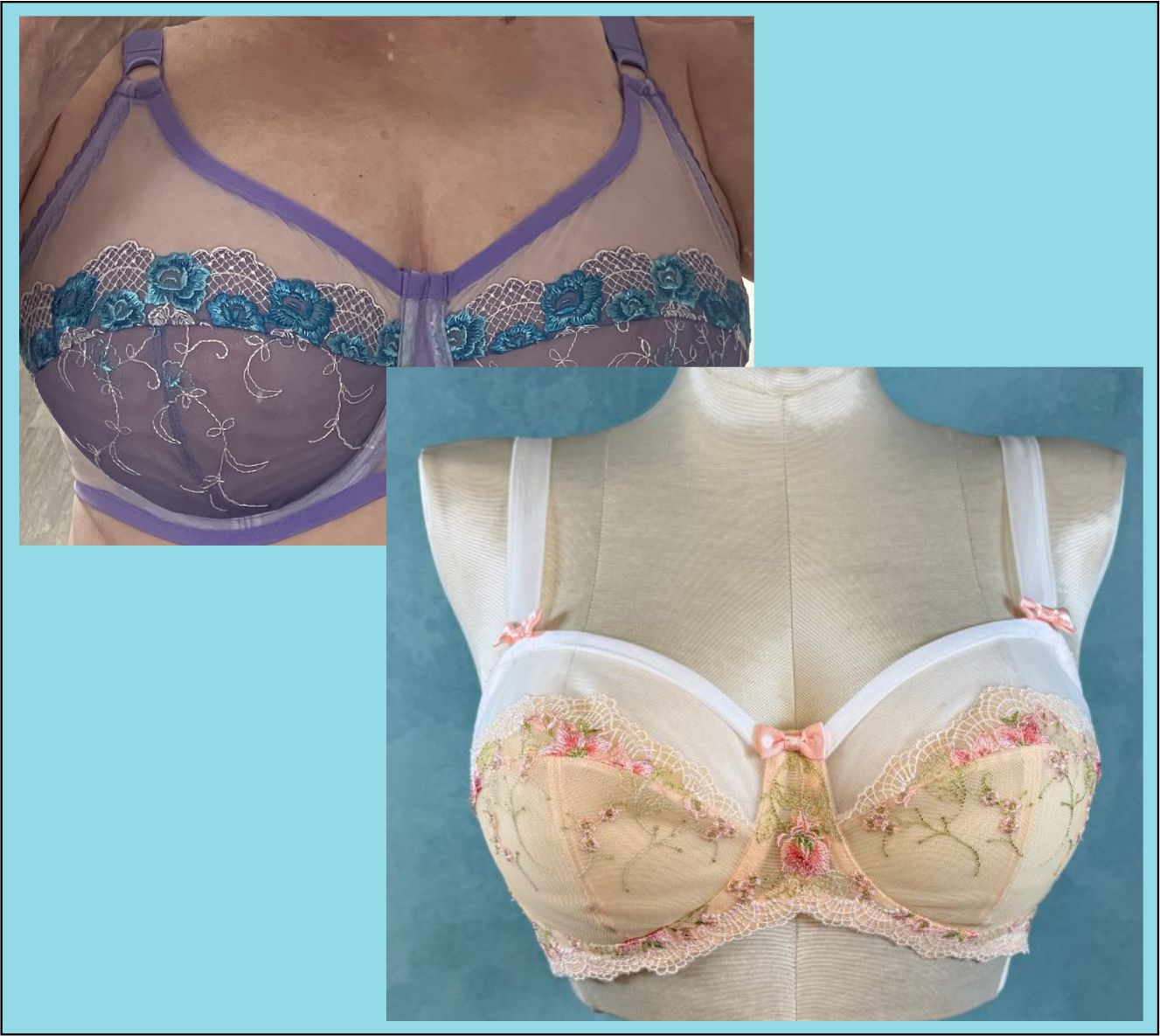

Stabilizing the neckline is a step in bra-making that is often forgotten, or ignored altogether. Yet stabilizing can make or break the fit of the bra, especially in the larger sizes. Stabilizing the neckline can allow the bra to tack back to the sternum and allow the wires to do their job of keeping the girls in their place. Without stabilizing, the fabric along the top edge of the bra will most often stretch, and that stretching will cause the wires to tip forward. And before you ask…NO, elastic neckline trim does NOT stabilize the neckline! It finishes the edge, but it does not stabilize it.
A few years back, I was teaching bra-making at the Saskatchewan Stitches Conference. One larger-breasted student came in late and was “catching up” at the back of the room. She forgot (or didn’t bother) to stabilize, and sadly, I didn’t catch her error until the end when she tried on the bra. The wires tipped out, and the neckline looked wavy. It dawned on me that the stabilizer might not be in place. Sure enough, she had forgotten. We added a stabilizer to the neckline, and it was amazing, the difference. The bra is now tacked back to the sternum. That was a valuable lesson! Now I always stabilize the neckline on any cups over a 3.5 BCD.
There are many stabilizers on the market that you could use for the necklines of bras. Some are narrow tapes, and some you have to cut in strips yourself. It doesn’t matter, but what does matter is that it has no stretch or very limited stretch so that it will tame that unruly neckline edge. Here are 6 different stabilizers I have used—ranked from my least liked to my favourite.
6. SELVEDGES CUT OFF WOVEN FABRICS Yes, this has been a “thing” for many years. Cutting off selvedges from woven quilting fabrics and using them as a stabilizer goes back, man, many years. The advantage is that it is a free and never-ending source (assuming you sew with wovens). However, remember it can shrink if it is cotton quilter’s fabric. Plus, it can be fairly bulky when you start adding elastic trim to it and folding it over.
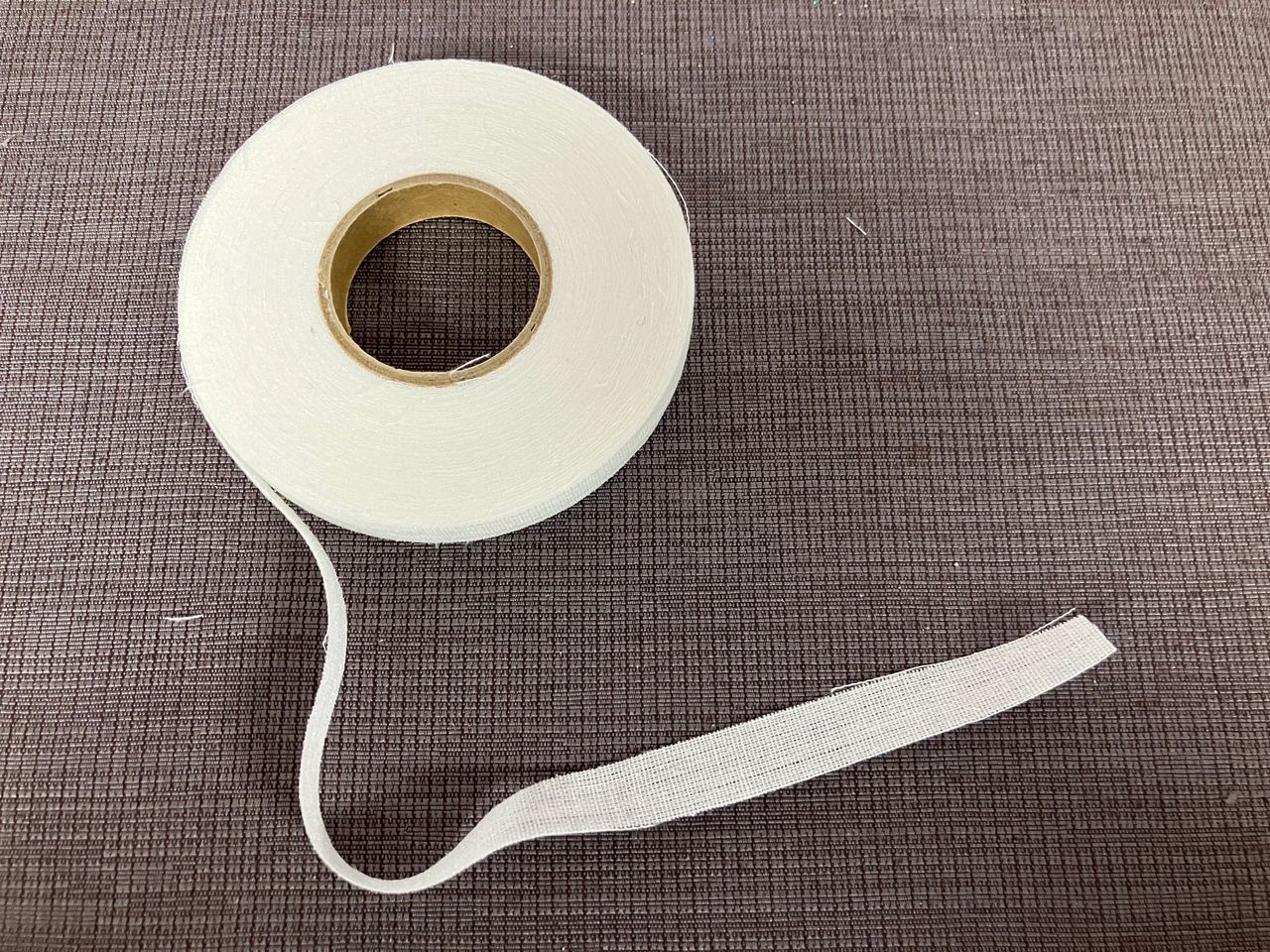
5. TWILL TAPE OR RIBBON. Sold in almost every sewing shop, twill tape and/or other ribbons are available in 1/4″ and wider widths. They are not fusible, and that, plus their thickness, has kind of turned me off using these for bra-making. Useful for corsets, though, just not bras.
4. NON-FUSIBLE TRICOT STABILIZER TAPE This is often called knit stay tape and has been used along the shoulder seams and pocket edges of knit garments. This tape has more stretch than any of the others I have used, and it was available in 125-meter rolls, so I was sure to never run out. Since I work almost exclusively with knits, I tend to use this when serging up shoulder seams, etc.
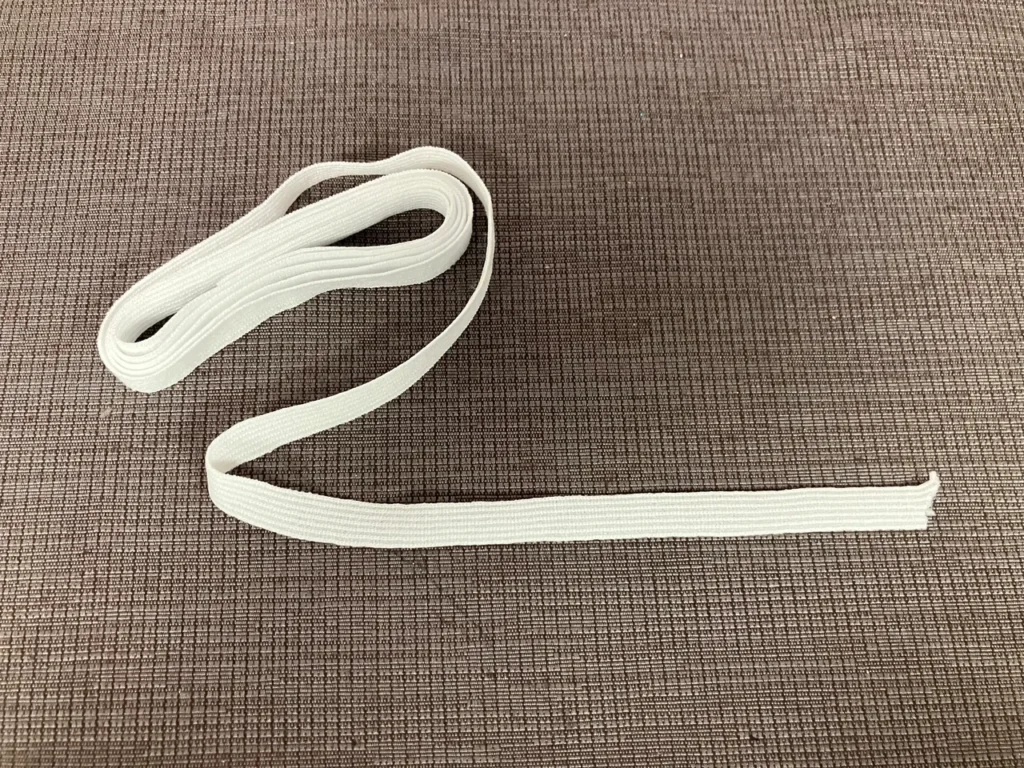
3. FUSIBLE TRICOT STAY TAPE A long time ago (in my industry pattern-making days), we had fusible knit interfacing cut into 1 cm strips and made into rolls for a client. It had very limited stretch and worked well. You can even buy it in some places as fusible knit stay tape. I still have a bit left in my stash. Advantages: it is soft, adheres well, and does the job. The disadvantage is the price and the inconsistency of supply. The same thing is available by the yard, but you have to cut it into strips yourself. Just be sure you cut it so the non-stretch direction is running lengthwise on the strip.
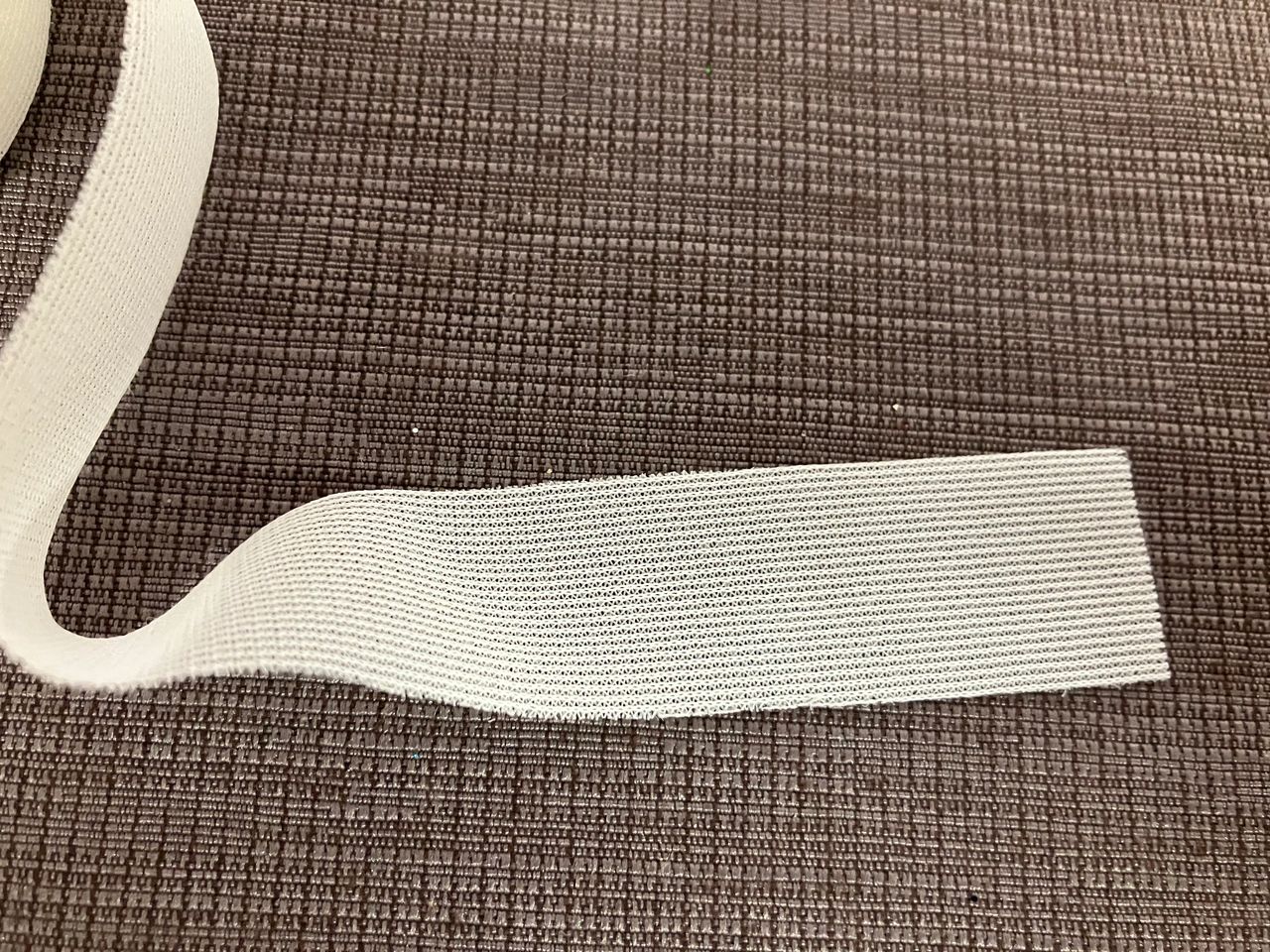
2. FUSIBLE WOVEN INTERFACING I bought a roll of “fusible roll-line tape” at a sewing conference one year, made of fusible woven interfacing cut into 1/4″ strips and sold as a roll of 10 meters. It worked well, with absolutely no stretch. My only concern, well, two really, is that it is hard to find, plus it is a bit thick, especially if you are using it under a neckline trim. It does seem a bit bulky when you turn it over. You could substitute fusible woven interfacing by the yard and strip it up yourself. Yes, it’s the same interfacing you would buy in any fabric store, so it is widely available by the yard.
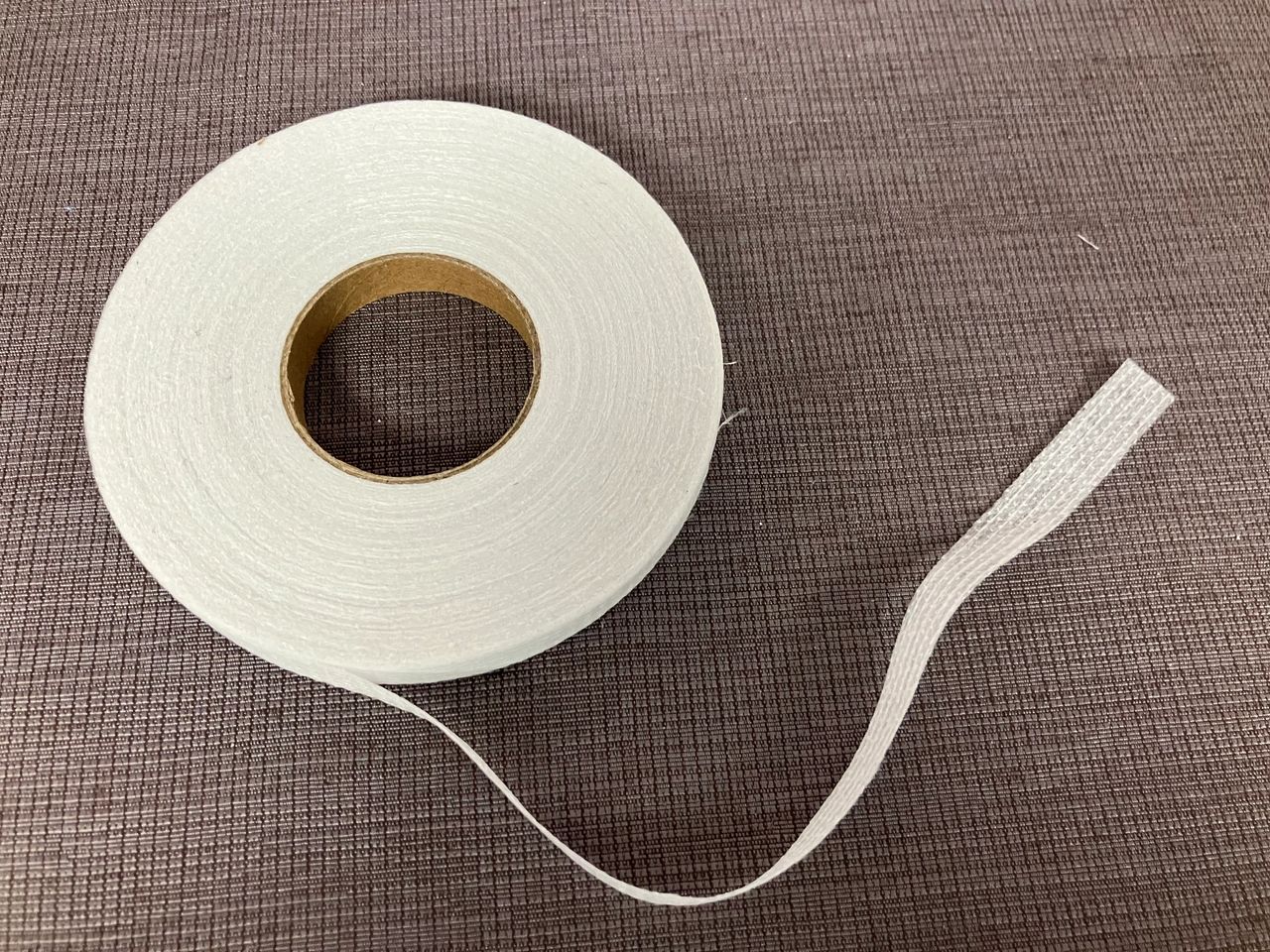
1. FUSIBLE NON-WOVEN TAPE I only discovered this by accident, while searching the web (Temu) for my #2 choice above. Non-woven fusible interfacing, 3/8″ (1 cm) wide in a roll. I was hesitant because when I think of a non-woven fabric, I immediately think it will pull apart or shred when I pull on it. Not a good thing when you are looking to immobilize the neckline. I was willing to give it a try since it came in a pack of two 100 m rolls for the crazy price of $3.70! Available in white or black or a mixed pack of both colours, it ticks all the boxes. It fuses easily to the inside of the fabrics, and I am able to curve it (more or less) around the strap curve. It is very thin, so it doesn’t add any bulk. If you make a mistake, you can pull if off without destroying the fabric.
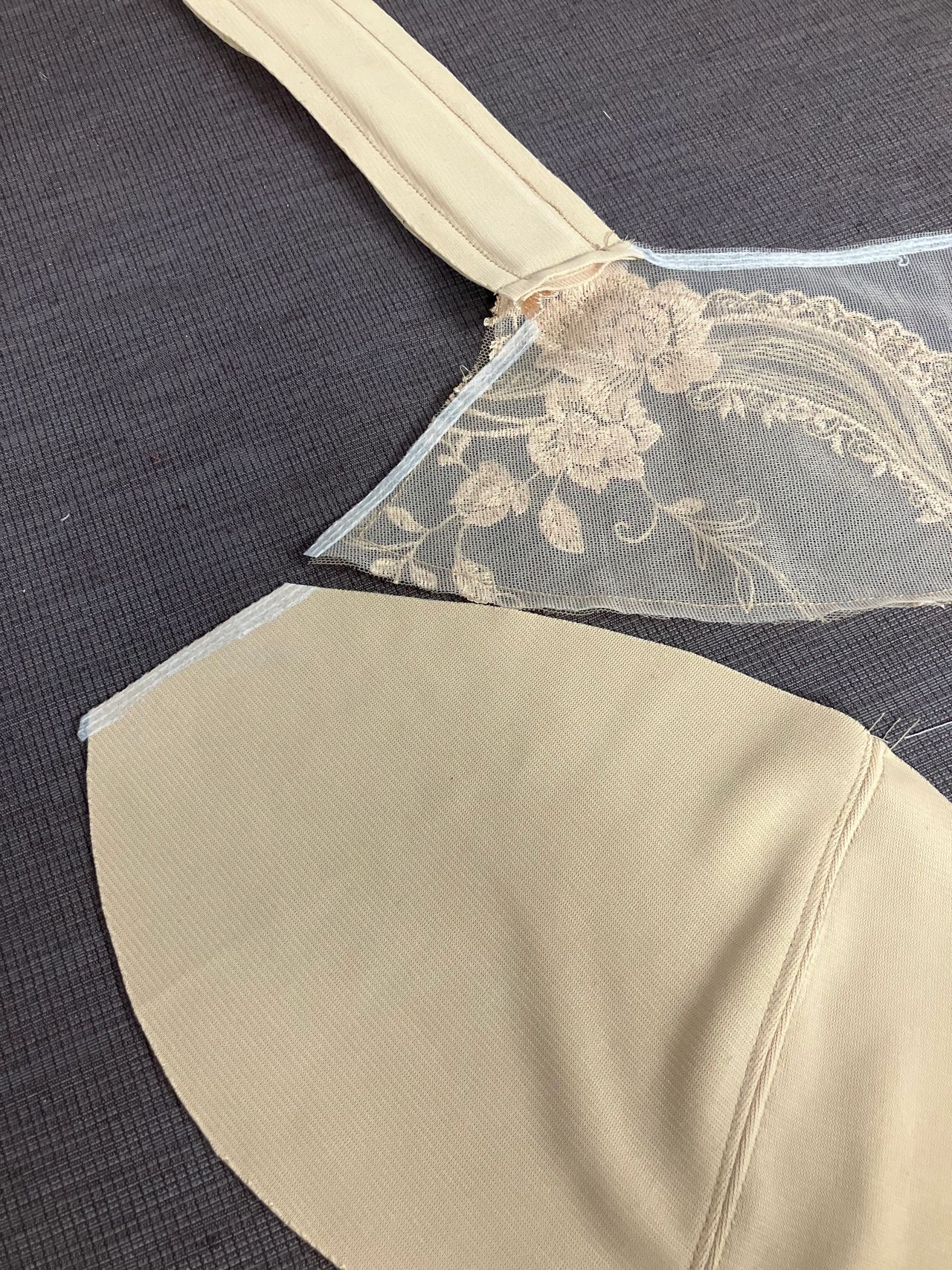
Now that you know what I use, here is where I apply it. Along the neckline edge, but also in the underarm area. I have to say, I don’t always put it under the arm, but I do when the fabric has a little more stretch than duoplex, for example. The fabric I show below is Simplex, and while similar to Duoplex, it is softer and has slightly more give to it.
So now you know about stabilizers and why you should use them! I hope you will use them in your bra-making.