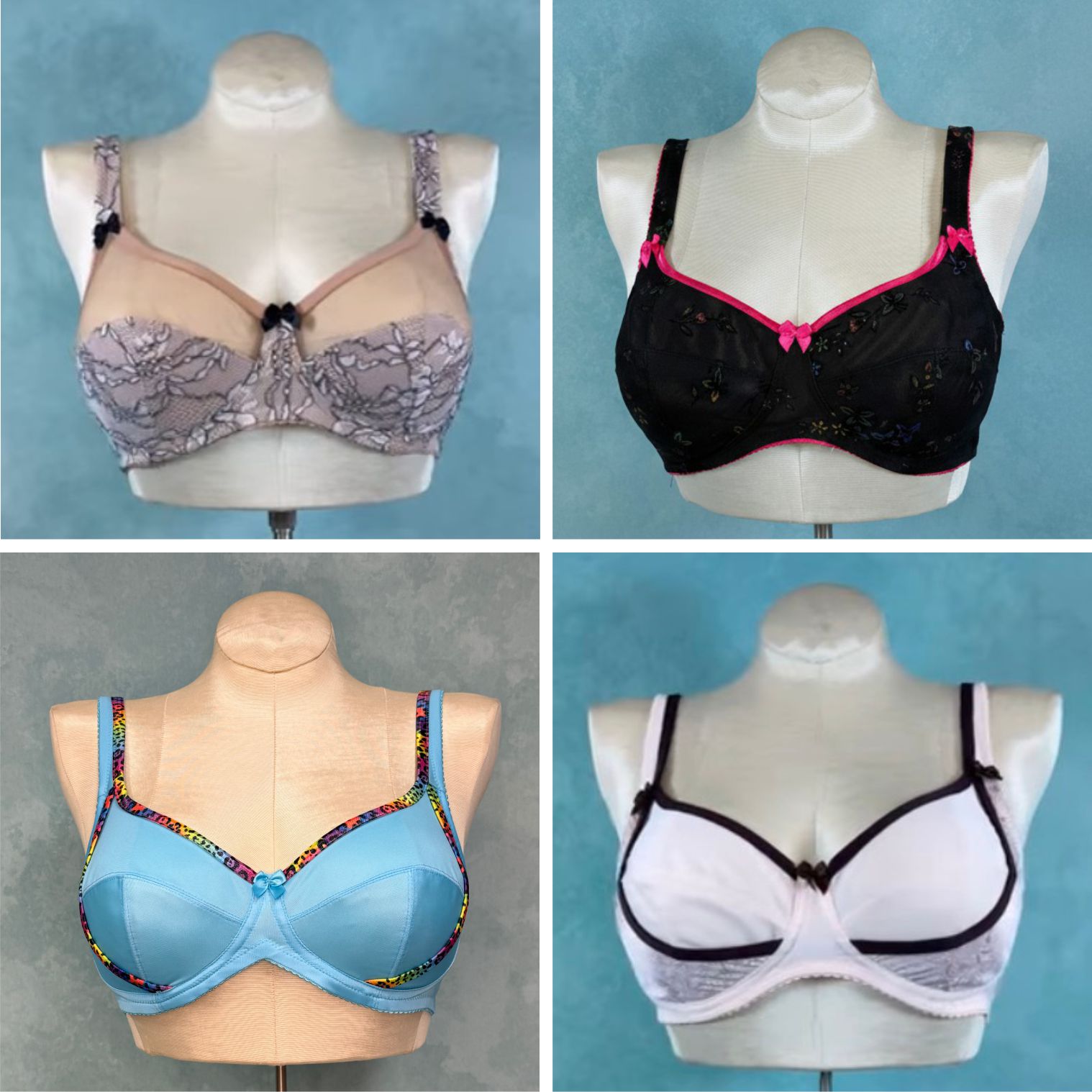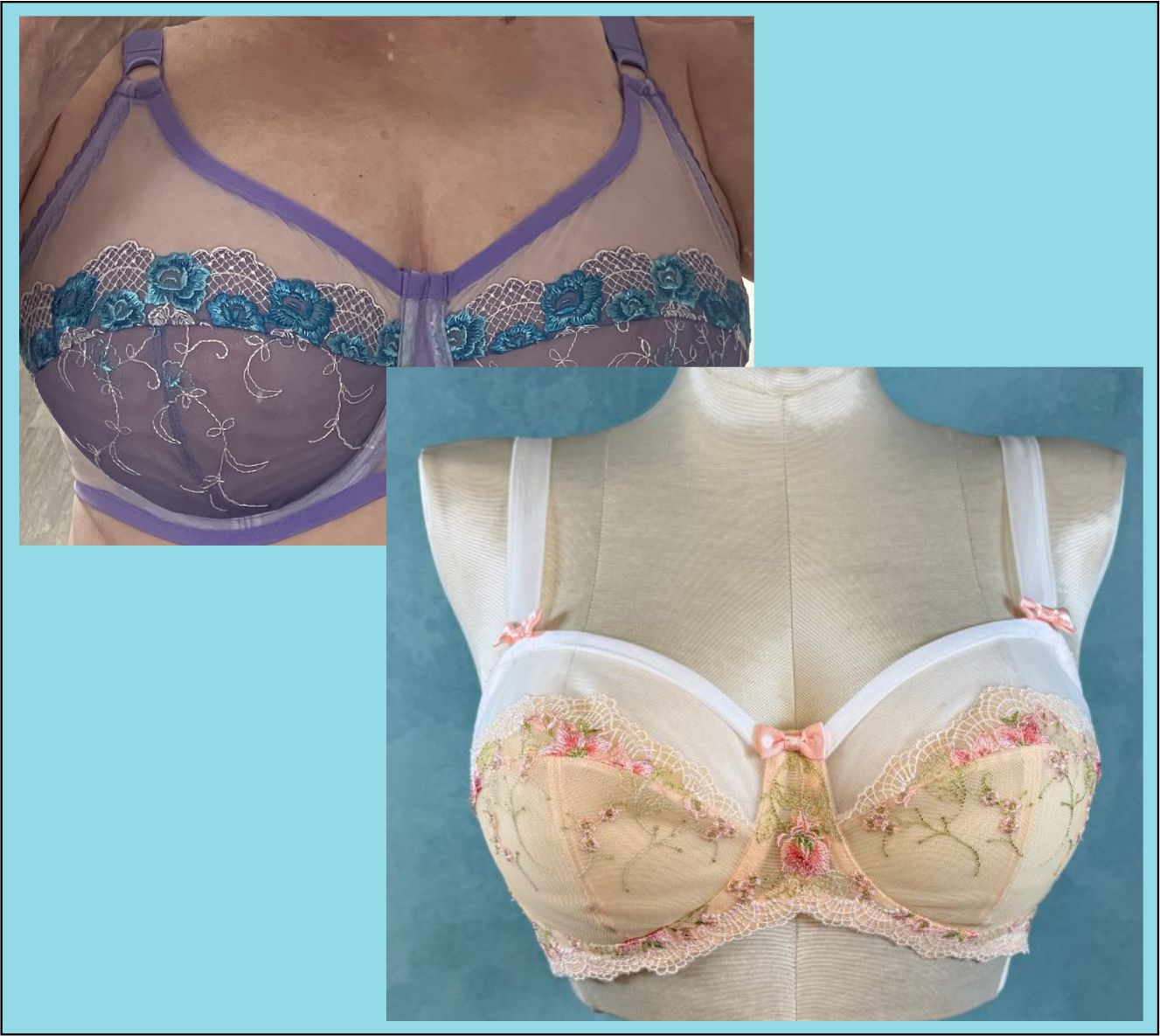

Thin is in!
Today’s post is about keeping it thin on the bottom! In the case of a bra band, thin is in! Questions to ask to determine if you want (or need) a thin band:
If you answered “yes” to any of these questions, you may want a thin band. Maybe you are thinking the band curls because you made your own bra, and maybe…somehow you missed an important step? No, it is not. Let me make this next part perfectly clear. Any elastic on the bottom band can curl, and the problem is worse if you have a high tummy right under the bust. The wider the elastic, the greater the tendency to curl. If you are slender or long-waisted, you may never experience this. I wish I could say I haven’t…but sadly, I lived with this every day. In fact, I thought this was “normal”.
That is…….until I noticed that some very high-end ready-to-wear bras had a very thin band in the area right under the cups. So thin that they appeared to be a partial band bra with no band running under the bust. In other words, the band was so thin that it looked like a partial band bra.
A partial band (or frameless bra) which is always an underwired bra. It’s actually the wires that make this bra work. The back band stops at the cup on the side. There is a separate piece (the bridge) that joins the two cups together. There is no band under the cup. What you see is the cup edge turned under and channeling sewn on to hold the wire. It really cannot curl up because the wire is holding it down.
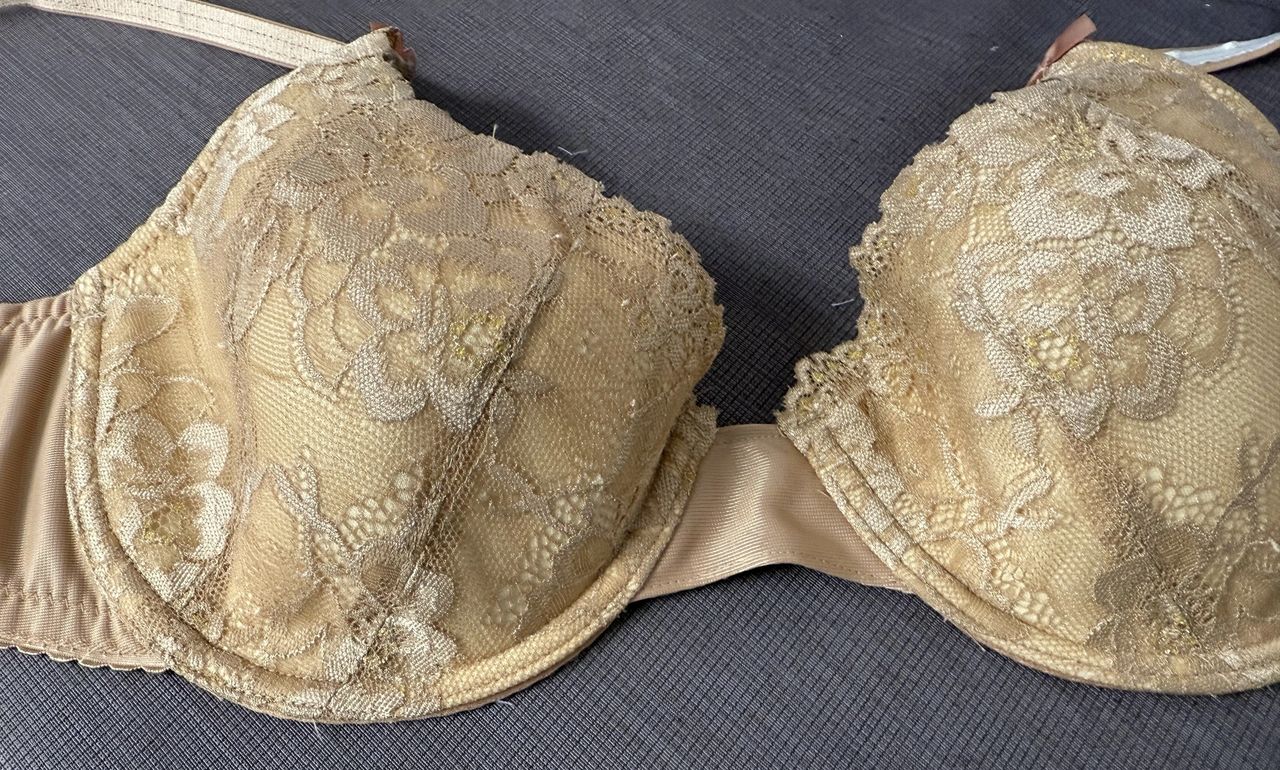
Lots of women think they are wearing a partial-band bra, but upon closer examination, we discover it is a full band after all. Check your own bra closely to see whether there really is a band at the bottom. A sure indication of a band is found by turning the bra over to show the inside.
Does the elastic continue all the way across the bottom edge? It doesn’t matter if the elastic is covered partially by the wire channeling, as long as you can see the elastic continuously across the bottom—it is a full band. Does the bra have underwires? If it does not, the bra has to be a full band; only full-band (“frame”) bras can exist without wires.
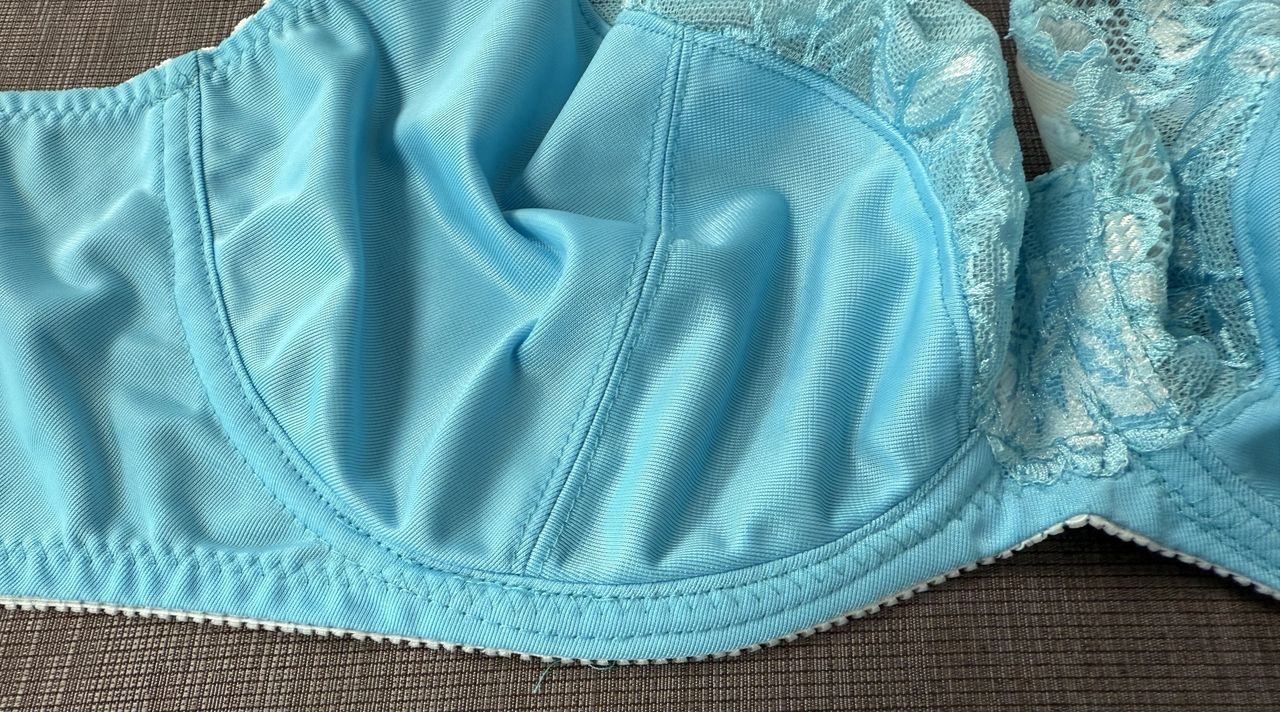
This Freja bra below is a full band, and you can see the elastic is continuous across the bottom edge. From the outside, this bra looks like a partial band, but it is a full-band bra. I achieve the minimalist look of a partial band bra by keeping the band as thin as possible. Thus, keeping the framework of a full-band bra intact.
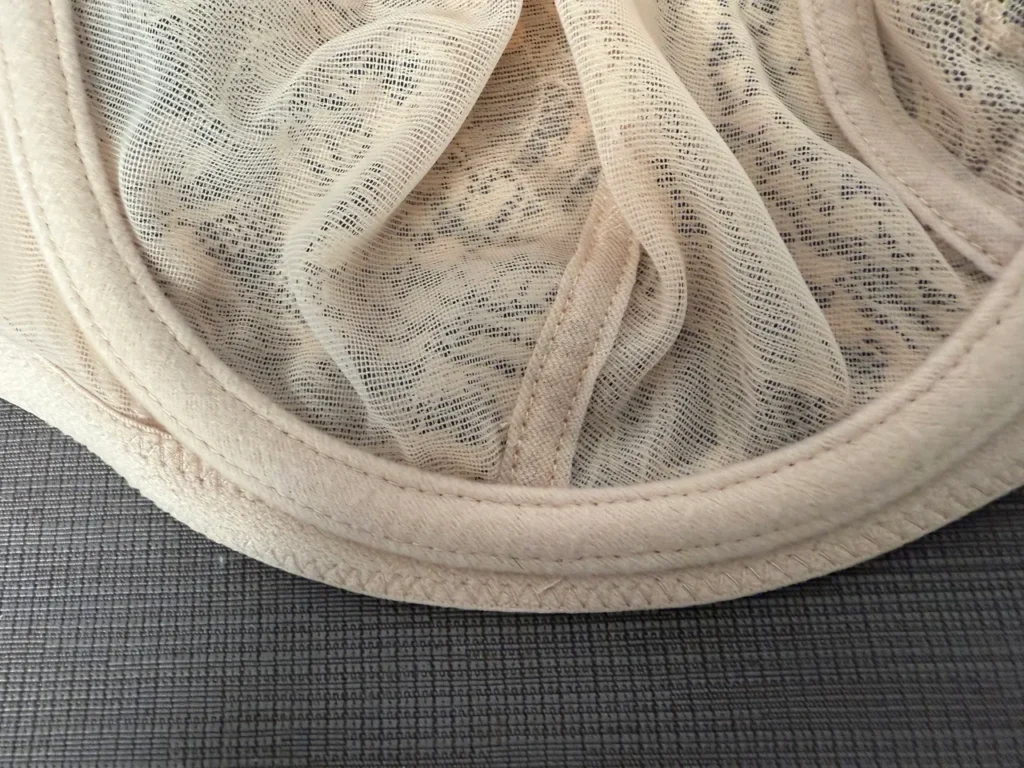
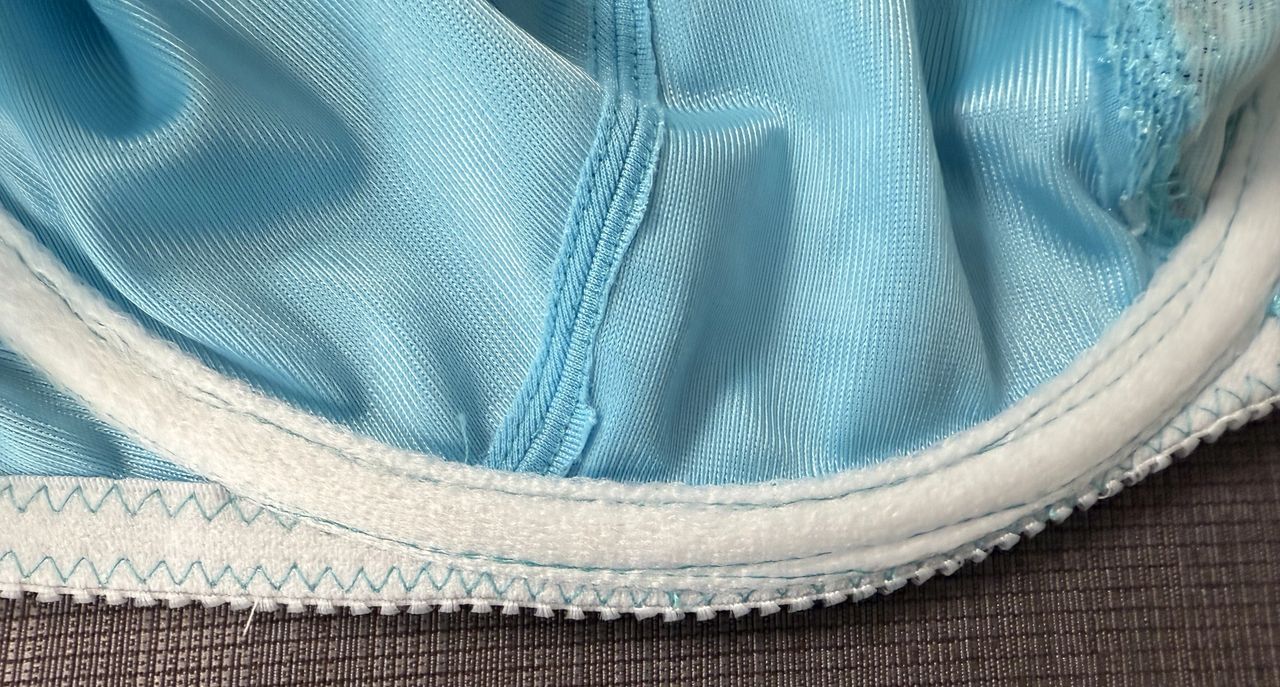
Now take a look at this same bra, from the inside. You can hardly see any elastic peeking out from under the channeling; in fact, all you can see are the elastic picots running under the cup. This band has been thinned to its absolute minimum width (the width of the channeling). So where does the elastic go? It certainly looks like it has disappeared. Hint … it’s hidden under the channeling.
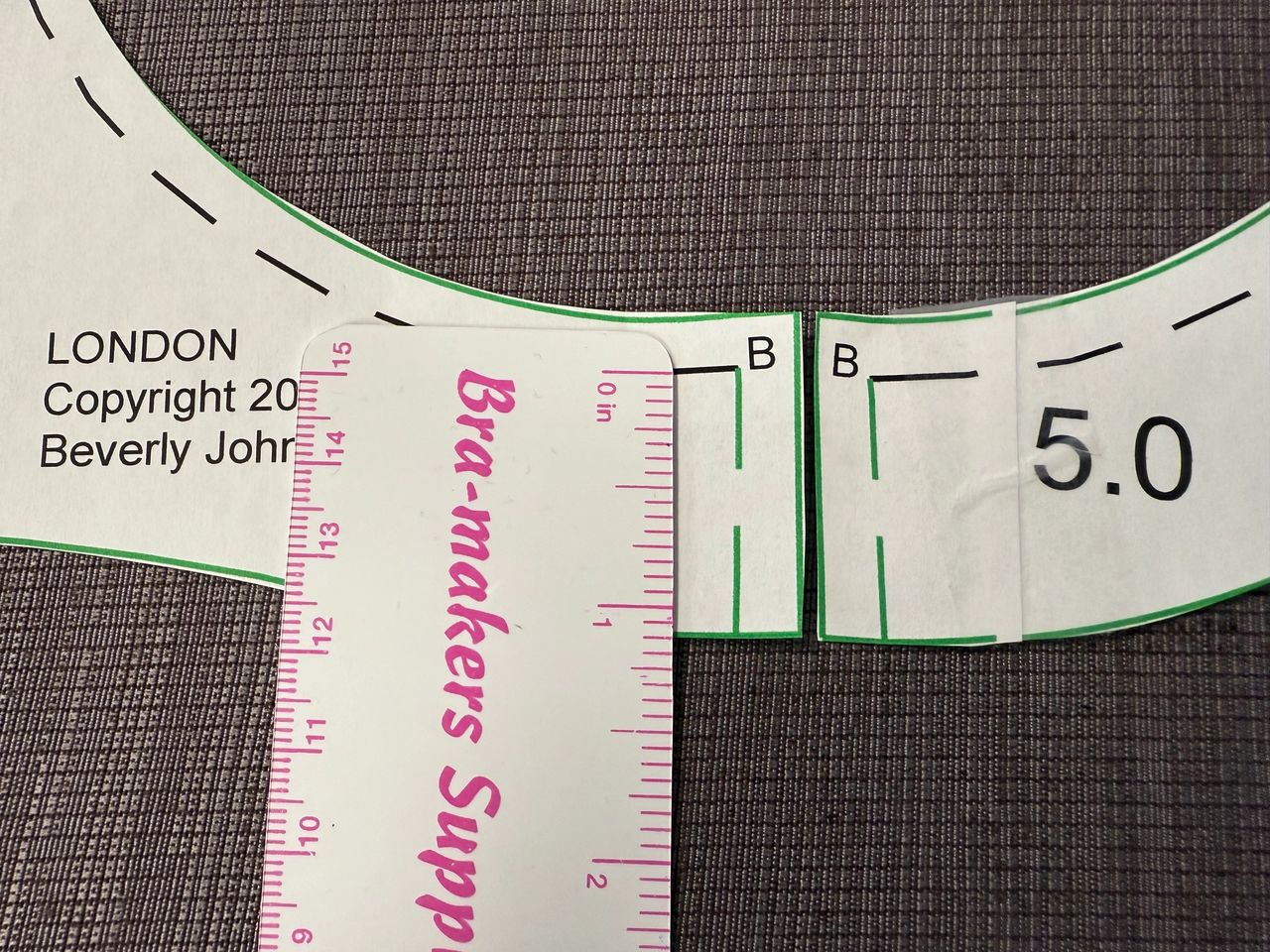
The elastic I used on the bottom of the band is 1/2” (12mm). So you need to make sure there is twice the width of the elastic in the band space at the bottom of the cup (the B notch). Here in this bra, the band is in two separate pieces, but yours may be one piece. Just be sure to have twice the width of whatever elastic you are using, and no more. Here I am going to trim off the band to exactly 1″. That will ensure I have the thinnest band without having to cut the elastic. I keep the 1″ width around the curve until the space starts getting wide again. It’s a total length of a few inches, but what a difference it makes!
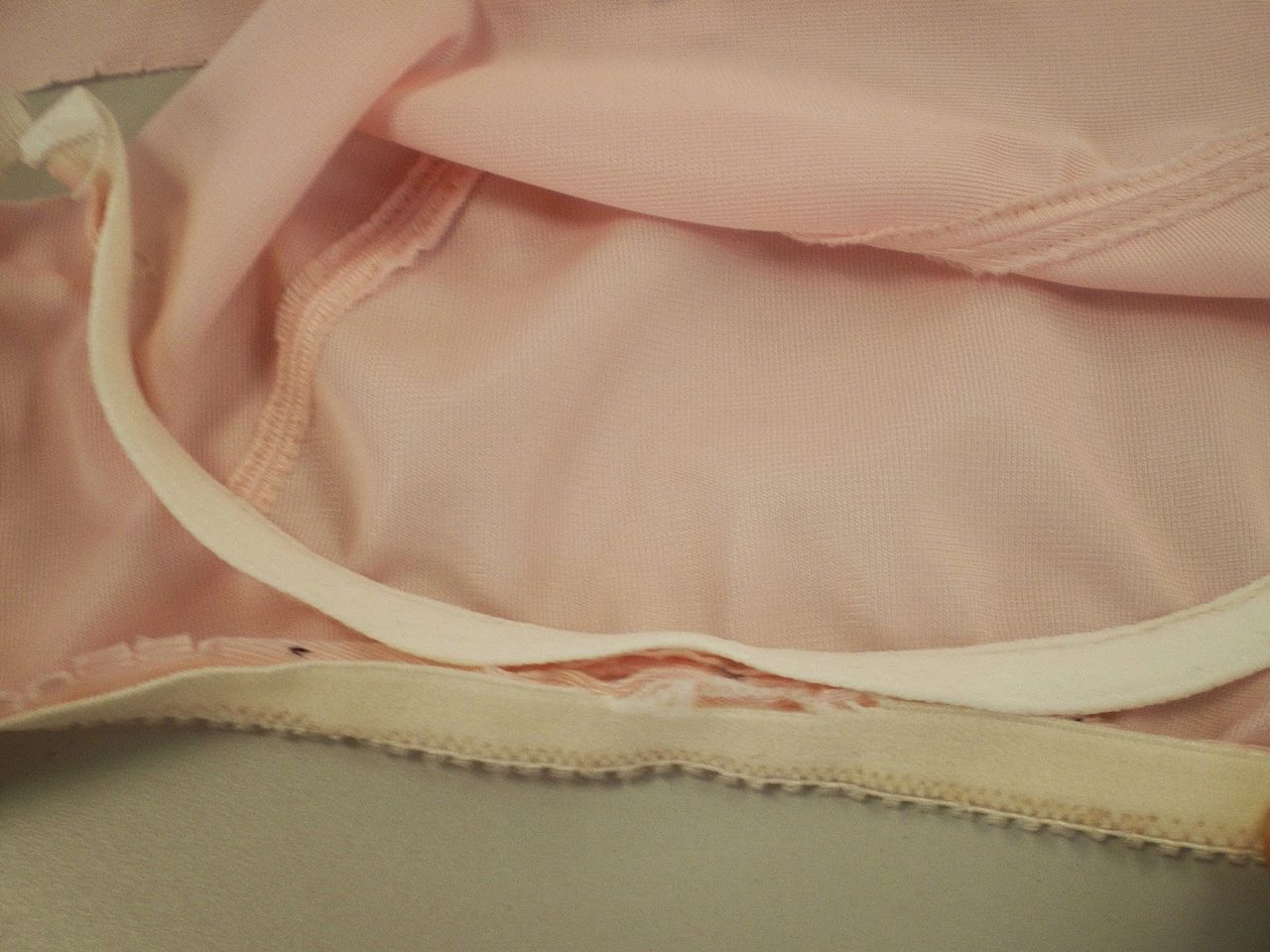
If you are using “3/4″-wide elastic, you normally would allow 1.5″ for that bottom band width. However…I find that a wide elastic tends to roll up a bit, especially if you have a high tummy. What I have done with 3/4″ elastic is to make the bottom band 1/2″ plus 3/4″ for the elastic allowance, so 1.25″ total. Then, after sewing the first pass of the elastic, I turn the elastic up to see how much I need to trim off (in the bottom curve only) to have the elastic avoid the wire line stitching and yet still be covered once the channeling is applied. That should not be more than 1/4” and only for a couple of inches (at most) along each side of the B notch. I mark it with a washout marker so I do not trim off too much. The channeling will completely cover the cut edge of the elastic and will allow you to get a nice, thin band.
It’s been at least 20 years since I began using a thin band for myself—now every single bra I make for myself has a thin band. No more curly edges for me!